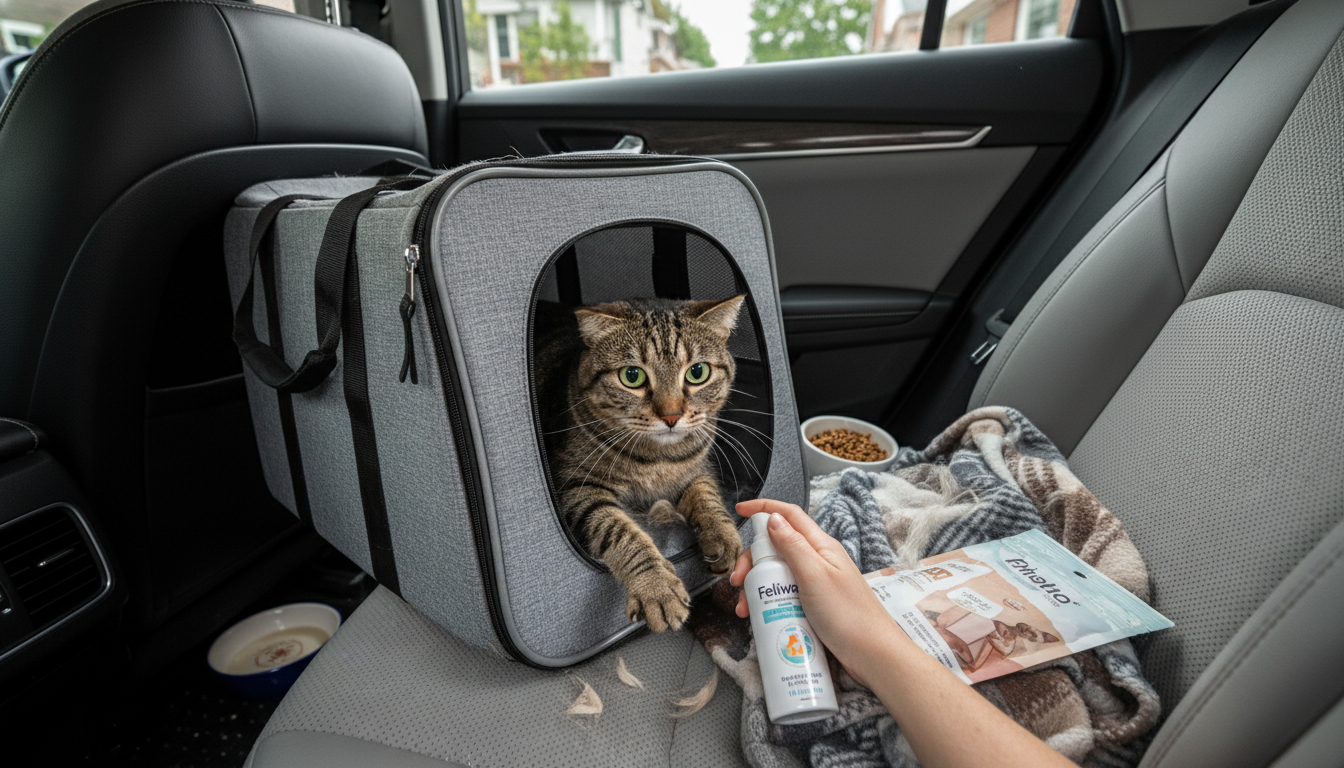
Moving can disrupt a cat’s sense of territory and routine, so stress often shows up as behavior changes within the first few days to a few weeks. The clearest clue is that your cat starts acting “not like themselves” even though the new home is safe and their basic needs are met.
Watch for hiding more than usual, reluctance to explore, jumpiness at ordinary sounds, or being unusually clingy. Appetite changes are also common—some cats eat less, while others graze nervously. Litter box issues can appear, including peeing outside the box, straining, or suddenly avoiding the box altogether. You may also notice excessive grooming (or a messy coat if grooming decreases), more vocalizing, pacing, or irritability when touched.
Mild hiding and reduced appetite for a day or two can be part of normal settling in. Red flags include not eating for 24 hours, repeated vomiting/diarrhea, blood in urine or stool, open-mouth breathing, or ongoing litter box accidents. Stress can worsen underlying medical problems, and urinary issues in cats can become urgent quickly.
Start with one quiet “safe room” stocked with food, water, a litter box, and a familiar bed or blanket. Keep a predictable routine for meals and play, add vertical spaces (cat tree or shelves), and provide hiding options like covered beds or boxes. Limit overwhelming introductions (new rooms, visitors, other pets) until your cat is confidently using the litter box and eating normally. Calming pheromone diffusers and puzzle feeders can also support a smoother transition.
For a deeper checklist of symptoms and calming steps, visit How do you know if your cat is stressed after moving?.
Many cats start settling in within 1–2 weeks, but a full adjustment can take a month or longer, especially for shy cats. Consistent routines and a gradual expansion of space usually speed up progress.













Leave a comment