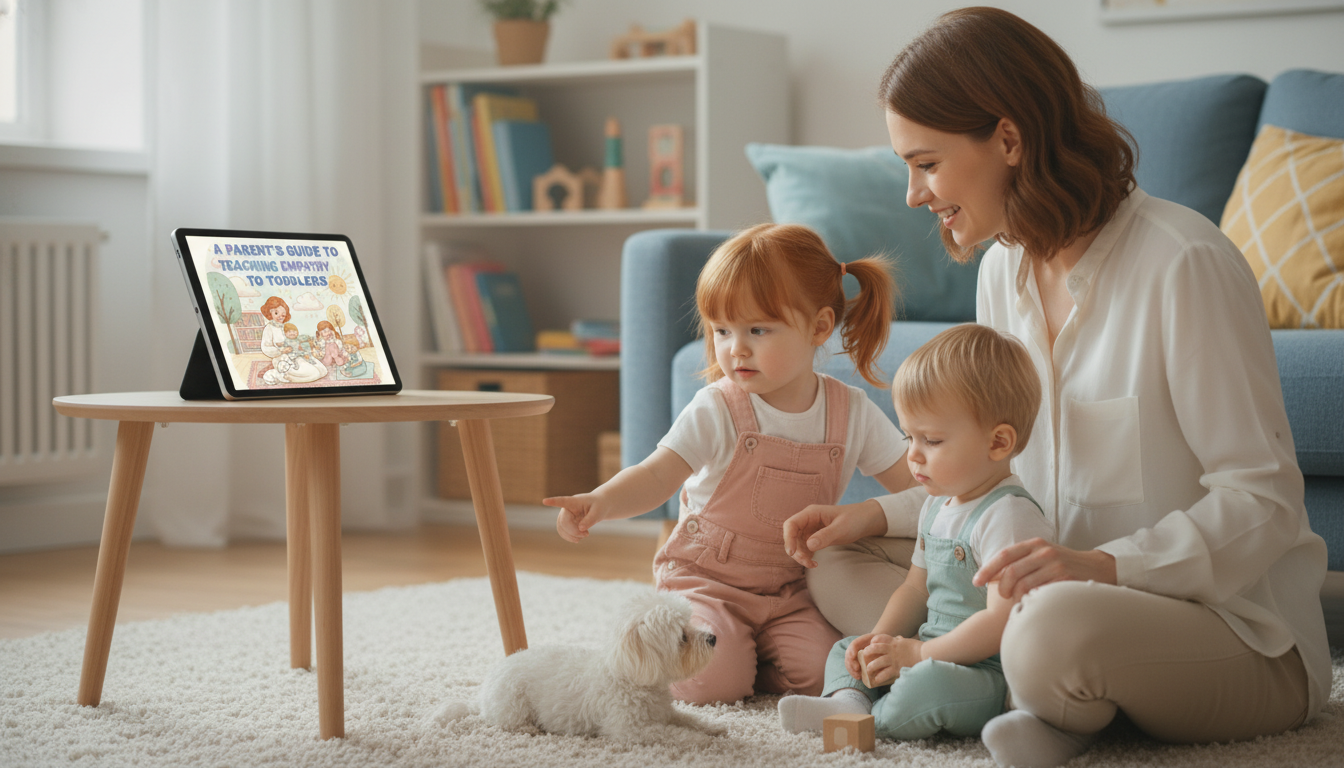
Empathy in toddlerhood grows through repeated, simple experiences: noticing feelings, naming them, and practicing small acts of care. With short, consistent routines and calm limits, toddlers can learn to recognize emotions in themselves and others, even before they can fully control impulses.
In toddlers, empathy often appears in quick flashes: a pause to stare at a crying face, a toy offered without being asked, or a clumsy attempt at a pat or hug. At the same time, that same child might hit, grab, or even laugh at a big reaction—especially when overstimulated or seeking connection.
This is normal because empathy and self-control develop on different timelines. A toddler can care deeply and still have a nervous system that moves faster than their judgment. Instead of looking for steady “kind behavior,” watch for moments of noticing and tiny shifts: a softening of the body, eyes tracking someone’s expression, or hands stopping mid-swing after an adult steps in.
Signs worth celebrating include:
Toddlers learn empathy best when they feel safe and connected. A regulated adult helps a child co-regulate—your calm tone and steady body are the “training wheels” for their emotional system. If you’re able, take one breath before intervening so your response stays firm without becoming sharp.
Emotion words give toddlers handles for what they’re experiencing. Keep it simple and immediate: “You’re frustrated,” “You didn’t like that,” “He looks sad,” “That surprised you.” Over time, this shared vocabulary makes it easier for a child to recognize feelings in others instead of getting stuck in their own.
Toddlers don’t benefit from long moral lectures. Instead, use brief cause-and-effect statements: “Her knee hurts,” “That scared him,” or “He wants space.” Concrete language keeps the focus on what happened and what helps next.
Stopping harm quickly protects everyone and teaches respectful limits. Clear boundaries also reduce shame because the adult takes charge of safety: “I won’t let you hit.” Then empathy can follow: “Hitting hurts. Let’s check on Sam.”
For a helpful snapshot of typical toddler development, the CDC’s toddler milestones can offer reassurance about what’s common at different ages.
Short scripts work because they’re easy to repeat—especially when you’re tired. Aim for a steady pattern: stop the behavior, name the feeling/impact, then guide repair.
Avoid shame labels like “You’re mean.” They blur the lesson and often trigger defensiveness. Keep the focus on behavior and repair: “That hurt. We fix it.”
Toddlers learn through rehearsal—especially when no one is upset. A few minutes of pretend play can build “muscle memory” that shows up later during real conflict.
These back-and-forth interactions are part of what researchers call “serve and return,” a foundational way children learn social skills through responsive relationships. See Harvard’s overview of serve and return for a clear explanation.
| Situation | What to say | What to do next |
|---|---|---|
| Another child is crying | “He’s crying. He looks sad.” | Model: offer tissue, gentle voice, ask caregiver if help is wanted |
| Your toddler grabs | “Stop. Grabbing hurts. You can ask for a turn.” | Return item, use timer/turn-taking, praise waiting attempts |
| Your toddler is the one upset | “You’re angry. I’m here.” | Breathe together, offer water, then problem-solve |
| Someone gets hurt (minor bump) | “Ouch. That startled you.” | Invite a gentle touch, bring ice pack/comfort item |
| Sibling conflict over space | “You both want space and the same spot.” | Offer choices: separate spots, take turns, or move activity |
For more on kids’ social-emotional growth, HealthyChildren.org (American Academy of Pediatrics) is a trusted, parent-friendly resource.
If you want a structured, printable guide to keep on hand, this resource is designed to support daily practice: A Parent’s Guide to Teaching Empathy to Toddlers (printable digital eBook).
And if your family has pets, empathy can grow through gentle caregiving routines (with close supervision). For pet-focused understanding that can support family conversations about stress cues and gentle handling, see: How to Tell if Your Cat is Stressed: The Ultimate Guide to Understanding and Reducing Cat Stress.
Use collaborative problem-solving and curiosity questions like “What might they be feeling?” Model respectful disagreement, and encourage habits such as checking in with friends, including others in groups, and thinking about impact before posting or texting.
Focus on perspective-taking, accountability, and real-world impact. Talk through motives and consequences in books or movies, encourage helpful roles or service, and practice repair after conflict by listening, naming harm, and making amends.












Leave a comment