
A living room often needs to do more than one job: lounging, working, entertaining, storing, and sometimes even sleeping. A flexible layout makes those roles feel intentional instead of improvised—so the room can shift from weekday routine to weekend hosting without turning into a maze of furniture. Below is a practical approach built on clear zones, right-sized pieces, and a few proportion rules, plus a simple workflow for testing arrangements with AI before committing.
Before moving a single chair, decide what the room must accomplish. List the top two or three activities the space needs to support—such as TV + reading, entertaining + work-from-home, or play space + storage. Put them in priority order so the layout protects what matters most even on busy days.
Next, separate “must keep” items (primary seating, a desk surface, key storage) from “nice to have” pieces (extra accent chairs, oversized coffee tables, multiple side cabinets). This step prevents the most common small-space problem: layering furniture until there’s no breathing room.
Finally, choose one primary focal point—TV, fireplace, a window view, or a statement artwork—and let everything else orbit around it. A single anchor makes the room feel calm, even when it’s doing a lot.
Measure wall lengths, door swings, window placement, outlets, radiators/vents, and anything that can’t move. Then plan circulation first. Clear paths reduce the “furniture obstacle course” effect and make multifunctional zones feel connected rather than cramped.
For everyday comfort, many designers aim for about 30–36 inches for primary paths. In compact rooms, you may compress a walkway to 24–30 inches, but only when there’s no better option and doors can still open cleanly. Clearance guidance and circulation concepts are also reflected in accessibility references like the U.S. Access Board ADA standards (helpful as a reality check for tight clearances).
| Layout element | Typical target | Small-space adjustment |
|---|---|---|
| Main walkway | 30–36 in (76–91 cm) | 24–30 in (61–76 cm) if unavoidable |
| Sofa to coffee table | 16–18 in (41–46 cm) | 12–16 in (30–41 cm) or use nesting tables |
| TV viewing distance | Varies by screen size | Use a smaller screen or wall-mount to reduce depth |
| Seating to side table reach | Within arm’s reach | Use a C-table or wall shelf |
Zoning keeps one activity from swallowing the entire room. Common zones include a lounge zone, work zone, play zone, and conversation zone. The goal isn’t to add more furniture—it’s to give each activity a “home base” so the room resets quickly.
Let zones share elements whenever possible: a console can serve as a desk; an ottoman can be extra seating plus hidden storage; a bookcase can store media while acting as a subtle divider. Define zones with a rug, a floor lamp, or the direction furniture faces—rather than adding another cabinet “just because there’s an empty wall.”
In open plans, try floating furniture to draw a boundary without blocking flow. The back of a sofa can create an edge that separates living and dining while still feeling airy.
Multifunctional rooms work best with pieces that pivot. Favor modular or lightweight items that can rotate without drama: armless chairs, nesting tables, poufs, and stools. Two smaller surfaces often outperform one big coffee table, especially when you need floor space for yoga, kids’ play, or extra guests.
In tight rooms, treat the rule as a starting point. If something has to shrink, reduce table depth before sacrificing seating comfort. References like Architectural Graphic Standards can also help validate typical planning relationships when you’re unsure about scale.
Use vertical storage to reduce floor clutter—tall shelving, wall hooks, and closed cabinets that hide the visual noise. If you need serious concealed storage (especially in studio living), a wardrobe-style cabinet can function like a mini-closet outside the bedroom; consider a statement piece such as the Modern Minimalist Ash Wood Wardrobe with Artistic Glass Sliding Doors to keep bulk contained in one intentional footprint.
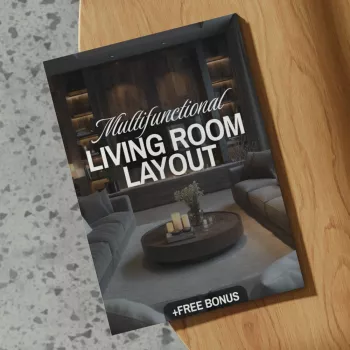
A worksheet-style process makes layout decisions faster and more repeatable: measure, define zones, select a template, then finalize a flexible furniture plan with spacing targets. If you want a reference you can reuse (and pair with AI iterations), the Multifunctional Living Room Layout Guide (digital download) is designed to help compare options quickly before you move heavy pieces—especially useful for renters and small-space dwellers who need a room to adapt to guests, workdays, and everyday living.
It’s a proportion guideline that helps key items relate visually—for example, art that’s about 2/3 the width of the sofa, or a coffee table around 2/3 the sofa’s length. It creates balance and reduces the “randomly sized” look; in tight rooms, keep the spirit of the rule while prioritizing clear walkways.
Multifunctional living means designing one space to support multiple activities through zoning, flexible furniture, and smart storage. A living room can comfortably act as a lounge, office, and guest area when each function has a defined spot and pieces can shift as needed.











Leave a comment