The No-Panic Declutter Toolkit: A Gentle System for Calm, Clear Rooms
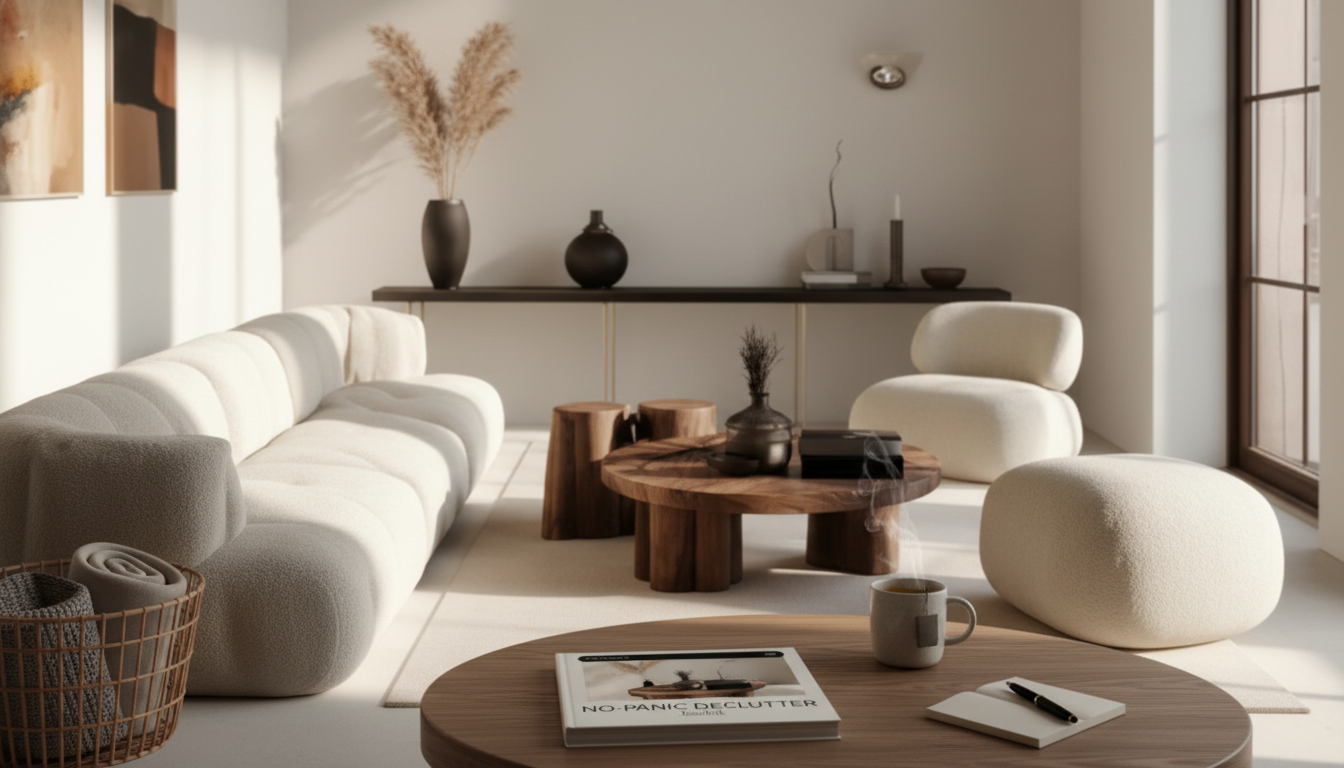
Decluttering can feel overwhelming when the mess is visible and time is limited. The No-Panic Declutter Toolkit is built for real life: short sessions, clear decisions, and a process you can repeat on busy days or low-energy days. Instead of “where do I even start?”, you get a simple path to quick wins—without the all-day burnout—and a few easy routines that help your space stay calmer after the first reset.
What the toolkit is designed to solve
- Reduces decision fatigue with structured prompts and checklists.
- Creates a repeatable process for busy days and low-energy days.
- Helps prevent “doom piles” by assigning clear next actions (keep, donate, trash, relocate).
- Supports calmer living spaces by building short maintenance habits.
When stress is high, executive function drops—meaning even small choices can feel heavy. If clutter has been feeding that stress loop, it can help to lean on tools that reduce choices and shorten the time to “better.” For practical, research-backed context on stress and coping, see the National Institute of Mental Health and the American Psychological Association.
What’s included in the digital downloads
- Room-by-room checklists to break big areas into smaller passes.
- Timed sprint plans (short sessions that still create visible progress).
- Sorting guides to make keep/donate/toss decisions faster.
- Labeling and zone-planning sheets to give items a consistent home.
- Maintenance trackers to keep surfaces clear and clutter from rebuilding.
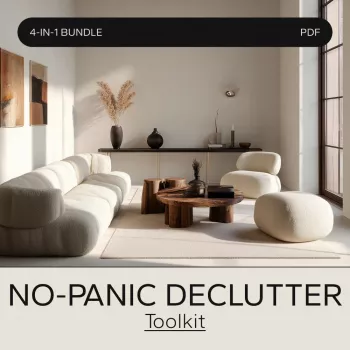
If you want a structured, self-guided approach, start with The No-Panic Declutter Toolkit: Digital Downloads for Calm and Clear Living Spaces. It’s designed to work whether you prefer using your phone/tablet or printing pages and checking items off by hand.
How to use it in 30 minutes (a no-panic reset)
The goal isn’t perfection—it’s visible progress and fewer loose ends. Choose one small, high-impact target and finish it all the way to “reset,” even if the rest of the room stays untouched for now.
- Pick one visible target: a counter, a chair, a single drawer, or one shelf.
- Set a timer and use a checklist pass: remove trash first, then dishes/laundry, then obvious “elsewhere” items.
- Sort remaining items into keep/donate/toss without creating extra piles across the room.
- Assign a home for keeps using zones (daily-use items closest, occasional items higher/farther).
- End with a quick surface wipe and a photo for motivation (optional).
Quick declutter sprint plan
| Minutes |
Action |
Goal |
| 0–5 |
Trash + recycling sweep |
Instant visual relief |
| 5–12 |
Return dishes/laundry/books to their categories |
Stop category drift |
| 12–22 |
Keep/Donate/Toss decisions |
Reduce volume |
| 22–28 |
Assign homes + light labeling |
Prevent re-clutter |
| 28–30 |
Reset surface (wipe/straighten) |
Finish with a “done” look |
Where this toolkit tends to help most
- Entryways and drop zones: keys, bags, mail, shoes, and “I’ll deal with it later” items.
- Kitchen counters and miscellaneous drawers: the daily clutter magnets.
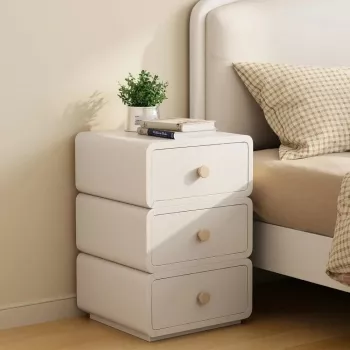
- Bedroom surfaces: nightstands and dressers that quietly become catch-alls.
- Home office paper flow: sorting, filing, and action queues so paper stops breeding.
- Shared family spaces: fewer arguments when items have clear zones and labels.
If you’re consistently short on closed storage, pairing a declutter reset with a storage upgrade can make the “keep it tidy” phase dramatically easier. For a long-term, high-capacity option, consider Modern Minimalist Ash Wood Wardrobe with Artistic Glass Sliding Doors to reduce visual clutter and give everyday categories a reliable home.
Making it stick: simple routines for calm spaces
- Do a 5-minute nightly reset in each high-traffic area (one surface is enough).
- Create a donation bag/box “station” so letting go doesn’t require extra prep or errands.
- Limit open storage to items used weekly; store the rest in labeled bins to cut visual noise.
- Schedule a weekly 20-minute category sweep (papers, toys, toiletries, pantry—rotate through).
- If a space backslides, repeat a short sprint instead of waiting for a full weekend.
When you’re working against stress, small routines often beat big plans. The CDC’s stress-coping guidance reinforces the value of manageable steps and consistent habits—exactly the kind of rhythm that keeps clutter from quietly rebuilding.
Who it’s best for (and who may want a different approach)
- Best for: people who want structure, prompts, and smaller steps instead of marathon clean-outs.
- Helpful for: renters, families, and anyone juggling work/appointments who needs faster resets.
- May not fit: those seeking a fully customized in-home organizing service rather than self-guided tools.
- Works well alongside: storage upgrades when the real issue is insufficient closets or furniture.
Product details at a glance
- Format: digital downloads (usable on phone/tablet or printed).
- Use case: declutter planning, step-by-step action, and maintenance routines.
- Availability: in stock.
To get started with the system, visit The No-Panic Declutter Toolkit: Digital Downloads for Calm and Clear Living Spaces and choose the format that fits your style (digital, printed, or a mix of both).
FAQ
Is no panic legit?
Legitimacy depends on the seller’s listing details, secure checkout, a clear digital-delivery method, and transparent customer support/returns policies. Confirm what you’ll receive, how delivery works (often via confirmation email or account download), and keep your receipt for reference.
What is the meaning of no panic?
“No panic” means using small steps, time limits, and clear next actions so decluttering feels manageable rather than stressful. It focuses on quick wins and repeatable routines instead of exhausting, all-day clean-outs.
Recommended for you









Leave a comment