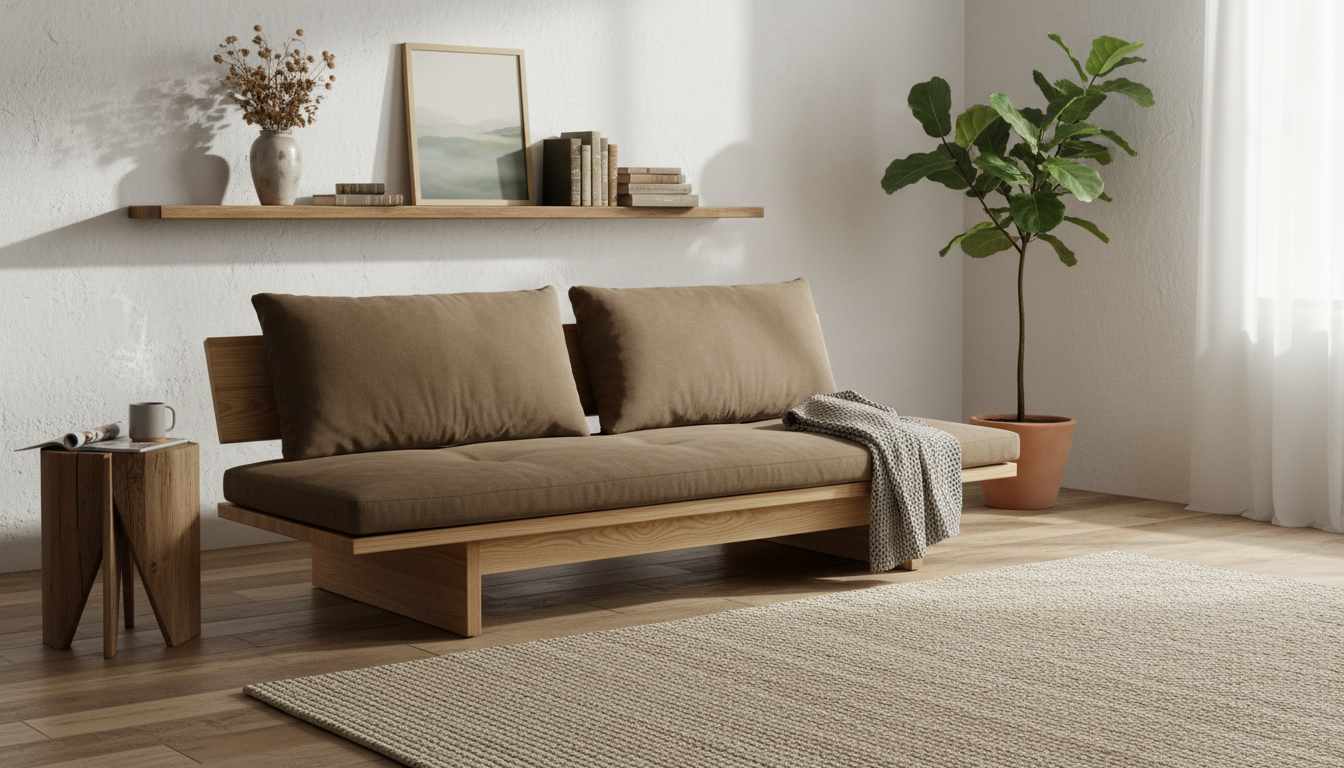
A solid wood sofa with modern countryside styling blends clean lines with warm, lived-in character. The look is relaxed but intentional: natural materials, honest construction, and a silhouette that feels current without looking temporary. If you’re shopping for a piece that can anchor the room for years, focus on what’s under the upholstery as much as what you see on the surface—wood species, joinery, support system, proportions, and how it will wear with daily life.
Modern countryside style lands between streamlined and rustic. Instead of ornate carving or overly “farmhouse” detailing, you’ll see simpler shapes, exposed or lightly featured wood, and textures that feel natural rather than glossy.
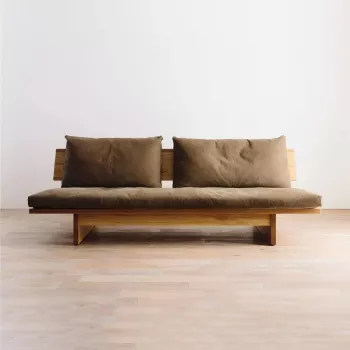
If you’re ready to make the sofa the centerpiece, start with the Modern Countryside Solid Wood Sofa and build outward with lighter accessories to keep the space balanced.
Not all “wood” frames perform the same. The key is understanding where solid lumber is used versus where engineered panels are used, and whether the frame is braced for real-world stress (sitting, shifting weight, moving homes).
| Frame material | Strength at joints | Stability over time | Typical use |
|---|---|---|---|
| Hardwood (solid) | High when joined well | Good; may move slightly with seasons | Rails, legs, visible wood structure |
| Thick plywood / LVL | High | Very stable | Hidden frame components, seat platforms |
| Softwood (solid) | Medium; depends on joinery | Can dent; may loosen if poorly built | Secondary framing, budget builds |
| Particleboard / thin MDF | Low to medium | Can swell or break if stressed or exposed to moisture | Low-cost non-structural areas |
For shoppers who care about responsible sourcing, materials certifications can be a helpful signal—see the Forest Stewardship Council (FSC) for an overview of forest certification and chain-of-custody practices.
Two sofas can look similar online yet feel completely different in the room. The difference is usually construction: how the frame is joined, how it’s reinforced, and how the legs and supports handle leverage over time.
Modern countryside rooms are meant to be lived in, so comfort needs to match the look. Instead of guessing from photos, use a practical checklist based on how you sit day-to-day.
If indoor air sensitivity is a concern, it’s worth understanding basic upholstery and composite-wood emissions. The U.S. EPA’s formaldehyde overview is a useful starting point when evaluating materials and ventilation.
A solid wood sofa can read visually heavier than an all-upholstered frame, so sizing and placement matter. Before falling in love with a style, confirm the home can actually receive it—and that it won’t choke circulation once it’s in place.
To extend the look beyond the living room, consider complementary wood tones in storage pieces like the Modern Minimalist Ash Wood Wardrobe with Artistic Glass Sliding Doors, which can help keep a consistent material story throughout the home.
Yes, but many pieces combine solid wood with engineered wood for stability and cost control. Check which structural parts are solid wood (like rails, legs, and stretchers) and how joints are reinforced, since “solid wood” sometimes refers only to visible sections rather than the full frame.











Leave a comment