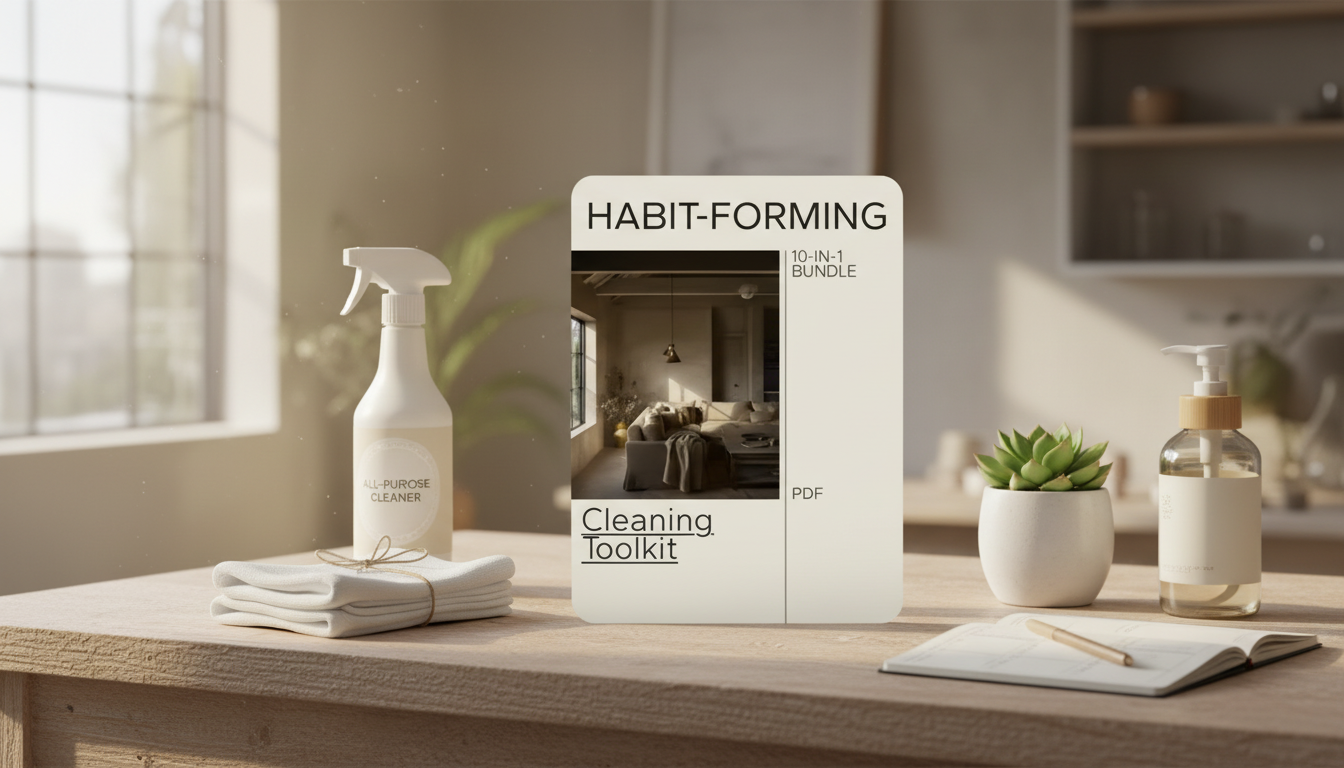
Cleaning gets easier when it’s tied to simple cues, small steps, and visible progress. This toolkit is designed to turn “someday” chores into a steady routine using printable and digital pages that reduce decision fatigue, break tasks into quick wins, and keep expectations realistic. Instead of waiting for the perfect free afternoon, you set up a small system that works on regular weekdays—then let consistency do the heavy lifting.
A routine lasts when it feels automatic, not heroic. That usually comes down to designing the loop and making the “start” painless.
The point of a cleaning planner isn’t to add pressure—it’s to move decisions out of your head and onto a page. The downloads in The Habit-Forming Cleaning Toolkit: 10 Digital Downloads to Make Cleaning Part of Your Daily Routine are designed to cover both daily maintenance and the “stuff that sneaks up on you” (baseboards, filters, behind-the-toilet moments).
| Download type | Best time to use it | Typical time needed | What it prevents |
|---|---|---|---|
| Daily reset tracker | Morning or evening | 5–15 minutes | Clutter creep and sink/counter pileups |
| Weekly schedule | Weekend planning or Sunday night | 10 minutes to plan; 15–30 minutes per task day | All chores landing on one exhausting day |
| Monthly checklist | Start of the month | 10–15 minutes | Forgetting seasonal or infrequent tasks |
| Room-by-room checklist | During focused cleaning blocks | 20–60 minutes | Skipping key steps and re-cleaning later |
| Quick-clean list | Low-energy days | 3–10 minutes | All-or-nothing burnout |
| Supplies inventory | Before shopping or re-stocking | 5 minutes | Running out mid-task and abandoning the routine |
| Cleaning caddy guide | One-time setup | 10–20 minutes | Wasting time hunting for tools |
| Streak/habit tracker | Daily check-in | 1 minute | Losing momentum after a missed day |
| Motivation/goal page | Weekly reflection | 5 minutes | Vague goals that don’t translate into actions |
| Deep-clean planner | Monthly or seasonal | 15 minutes to plan | Deep cleaning feeling overwhelming and never starting |
For a little extra motivation, stack the new routine with a satisfying “after” moment—fresh sheets, a cleared coffee station, or a tidy entryway that makes leaving the house calmer. If you’re also tightening up storage to reduce visual clutter, a dedicated piece like the Modern Minimalist Ash Wood Wardrobe with Artistic Glass Sliding Doors can make daily resets faster by giving everything a real home.
When you need to disinfect (especially in kitchens and bathrooms), follow product label directions and prioritize high-touch surfaces; the CDC’s guidance on cleaning and disinfecting is a helpful reference for safe, effective routines.
If you enjoy having a “do the next right thing” page for different parts of life, you might also like another quick-reference digital planner such as the Concert Outfit Cheat Sheet: Your Ultimate Guide to What to Wear to a Concert—the same principle applies: fewer decisions, faster follow-through.
Yes—most people either print pages for a fridge/binder or import them into a note-taking app on a tablet. Picking one format (print or digital) at first keeps the routine simple and consistent.
Many households notice a difference within a few days as counters, sinks, and visible clutter stop piling up. The bigger change usually shows up in 2–4 weeks when weekly tasks prevent the slow buildup that triggers marathon cleanups.
No—missed days are normal. Use a make-up day and restart with the smallest version (like the quick-clean list) so you maintain continuity instead of trying to “catch up” all at once.









Leave a comment