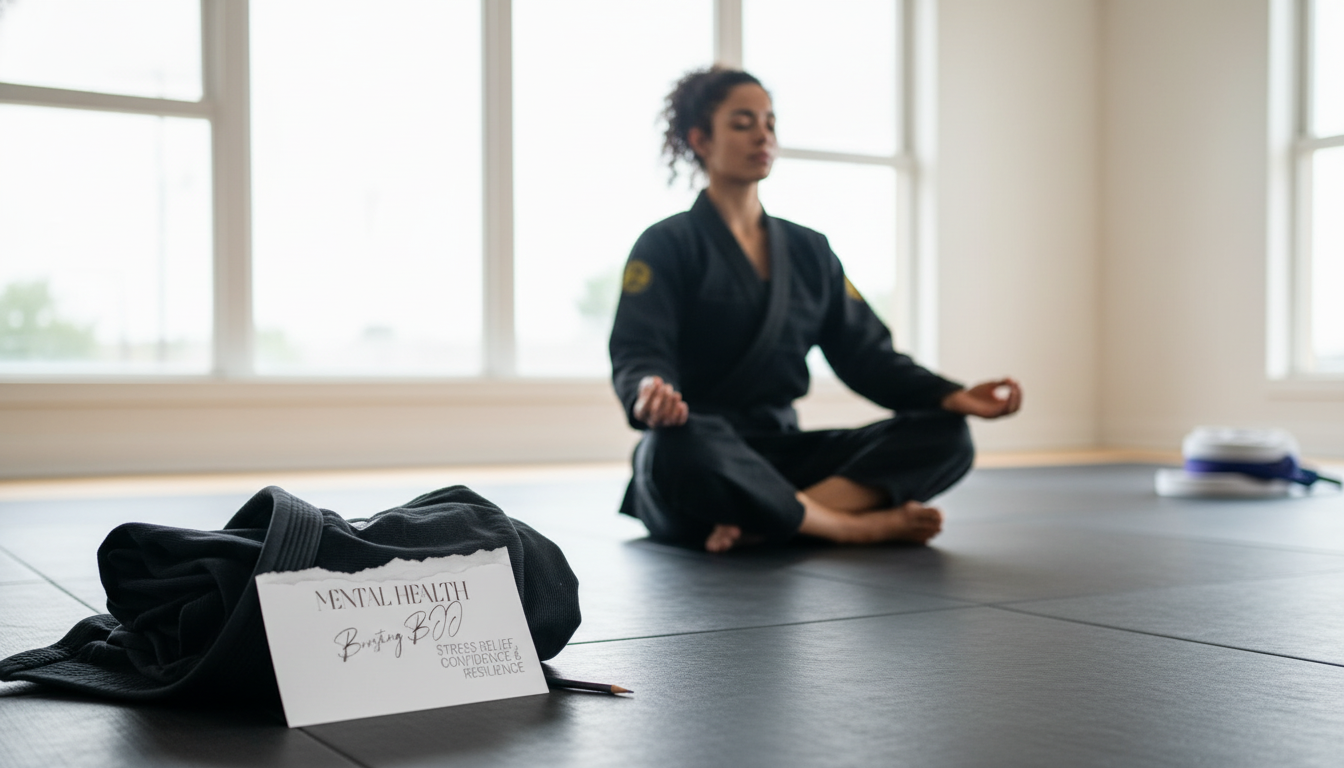
Mental Health Boosting BJJ Checklist: Stress Relief, Confidence, and Resilience on the Mats
Brazilian Jiu Jitsu can support mental well-being by pairing physical exertion with focused attention, social connection, and measurable skill progress. This checklist turns common “feel better” habits into repeatable, mat-ready actions before class, during training, and after you leave the gym.
Why BJJ can help mental health
BJJ is uniquely “mentally engaging” exercise: it demands attention, rewards small improvements, and happens in a supportive room where people are working through hard things together. While it isn’t a substitute for professional care, it can be a powerful complement.
- Stress downshift: intense, time-boxed effort redirects attention away from rumination and into immediate problem-solving. Regular physical activity is also linked with mental health benefits, including improved mood and reduced anxiety for many people (CDC).
- Confidence growth: visible skill acquisition (clean reps, better escapes, calmer sparring) beats vague motivation—progress is tangible.
- Resilience: you experience discomfort safely, make mistakes, reset, and try again with a plan—an approach that transfers to daily stress.
- Community: shared goals and accountability can reduce isolation; supportive training partners can create a steady sense of belonging.
Pre-class checklist: arrive calm, focused, and ready
The goal before class is simple: reduce uncertainty and show up with one clear “next step.” That alone can lower the mental load that often spikes right before training.
- Set one intention: pick a single theme (e.g., “frame first,” “breathe through scrambles,” “get to half guard and settle”).
- Do a 2-minute breathing reset: slow nasal inhale, longer exhale. A longer exhale can help signal “downshift” when you’re keyed up.
- Choose one controllable win condition: ask one question, drill with full attention, or tap early to protect joints.
- Pack for confidence: water, a light snack if needed, clean gear, and a simple post-class plan (shower, meal, 10-minute walk).
- If anxiety is high, reduce uncertainty: message a training partner or coach before class to confirm you’ll get a round, a drill partner, or a lower-intensity start.
On-the-mats checklist: mental skills during drilling and sparring
Training is where stress can either spike (panic, ego, frustration) or steadily improve (present-moment focus, problem-solving, emotional regulation). These tools keep you on the second path.
Drilling: build calm confidence with quality reps
- Quality before speed: slow, accurate mechanics first; add pace only after you can hit key checkpoints.
- Correct one detail per round: pause briefly, fix one thing (hip angle, head position, grip), then resume.
Sparring: use simple cues under pressure
- Anchor cues to interrupt panic loops: “chin tucked,” “elbows in,” “breathe,” “frames first.” Repeat one cue when you feel flooded.
- Tap as a skill: tap early, reset, and ask for one actionable adjustment. This protects your body and reduces ego-driven overload.
- Choose rounds intentionally: mix one challenging roll (growth) with one technical roll (learning) to avoid emotional burnout.
- After a rough round, run a 10-second reset: stand, exhale, unclench hands/jaw, and name the next micro-goal (e.g., “get inside frames”).
Quick checklist for a mentally supportive BJJ session
| Moment |
What to do |
Why it helps |
| Before class (2 minutes) |
Slow breathing + one intention |
Reduces stress and creates direction |
| Warm-up |
Stay at conversational pace; relax shoulders |
Prevents early adrenaline dump |
| Drilling |
Quality reps; ask one question |
Builds mastery and confidence |
| Positional sparring |
Start from a known spot; focus on one escape or control |
Turns chaos into manageable steps |
| Free sparring |
Tap early; reset with anchor cue |
Protects body and lowers panic response |
| After class |
Brief note: 1 win + 1 lesson |
Reinforces progress and resilience |
After-class checklist: lock in the mood lift and prevent burnout
Building confidence without turning training into pressure
- Track process metrics: sessions attended, rounds completed, and techniques attempted with good form.
- Use progressive exposure: start with positional rounds, then increase intensity once breathing stays steady under pressure.
- Celebrate quiet wins: staying calm in a bad position, tapping early, returning after a tough class, or asking for help.
- Set boundaries: limit hard rounds per week, especially during high-stress periods. Chronic stress can affect the body and mind, so dialing intensity is a skill, not a setback (APA).
Resilience habits that translate off the mats
When to adjust the plan or seek extra support
- Scale intensity if training increases irritability, sleep problems, or persistent dread; reduce hard rounds and prioritize technique weeks.
- If panic symptoms show up during rolls, ask to start from lighter positions, shorten rounds, and build up gradually.
- Persistent depression, anxiety, trauma symptoms, or thoughts of self-harm warrant professional support; training can complement care but isn’t a substitute. For practical guidance on caring for your mental health and when to seek help, see the National Institute of Mental Health.
- Choose safe partners and gyms: consent for intensity, strong tapping culture, and coaching that prioritizes well-being.
Using the Mental Health Boosting BJJ Checklist
Helpful guides you can use right away
FAQ
What are some mental health boosters?
Reliable mental health boosters include consistent sleep, regular movement, supportive social connection, time outdoors, mindfulness practices, and learning skills that create a sense of progress. BJJ can combine movement, community, and skill-building in one routine when training is approached safely and sustainably.
What helps boost mental health?
Practical supports include a steady routine, moderate exercise, stress-management skills (like breathing and reframing), limiting substance use, and spending time with supportive people. Professional help is important when symptoms are persistent or severe, and BJJ can be one helpful option alongside care when intensity and safety are well-managed.
Recommended for you












Leave a comment