Tame the Baby Clutter Jungle: A Calm, Room-by-Room Reset for Overrun Homes
Baby gear multiplies fast—hand-me-downs, well-meant gifts, backup supplies, and “just in case” items can crowd out the space needed to rest, feed, and move safely. A clutter reset works best when it’s quick to start, easy to maintain, and gentle on exhausted parents. The goal: clear pathways, keep daily essentials within reach, and create a simple system for the next wave of stuff.
Start with safety and sanity zones (15 minutes)
When energy is low, start where you’ll feel the win immediately.
- Pick two non-negotiable areas to clear first: a walking path (crib to door, bed to bathroom) and one surface used daily (changing area, kitchen counter, or bedside table).
- Do a fast sweep for hazards: loose cords, small objects, unstable stacked bins, and items blocking vents or heaters. For extra guidance on creating a safer home environment, reference the American Academy of Pediatrics home safety tips and the CDC infant safety and injury prevention resources.
- Use a single laundry basket or tote as a “roaming bin” for anything that doesn’t belong in the room—no decisions yet, just remove visual noise.
- Set a tiny finish line: stop after 15 minutes, then repeat later. Consistency beats marathon cleanups.
Fast triage labels for baby clutter
| Label |
What goes in it |
Where it lives |
| Daily use |
Diapers, wipes, burp cloths, onesies, feeding basics |
One caddy/basket per main zone (nursery + living area) |
| Weekly use |
Extra sheets, backup bottles, spare swaddles, bath supplies |
One shelf or lidded bin per category |
| Next size / next stage |
Clothes to grow into, teething items, babyproofing gear |
A single “Next” tote per child, dated |
| Outgrown / done |
Too-small clothes, unused gadgets, duplicates |
One donation/sell box near the exit |
| Sentimental |
First outfit, milestone items, notes/cards |
One memory box with a hard limit |
A simple sorting rule when decision fatigue hits
- Use the “Two touches” rule: pick an item up and either place it in a home or place it in a labeled bin—avoid repeated shuffling.
- Ask three quick questions: Is it used this week? Is it safe and complete? Would it cost more time than money to replace?
- Limit maybes: create a small “parking spot” bin for uncertain items, then schedule a 10-minute review once a week.
- Handle duplicates decisively: keep the best one, store one backup only if it truly prevents a late-night emergency, and release the rest.
Room-by-room reset that matches real routines
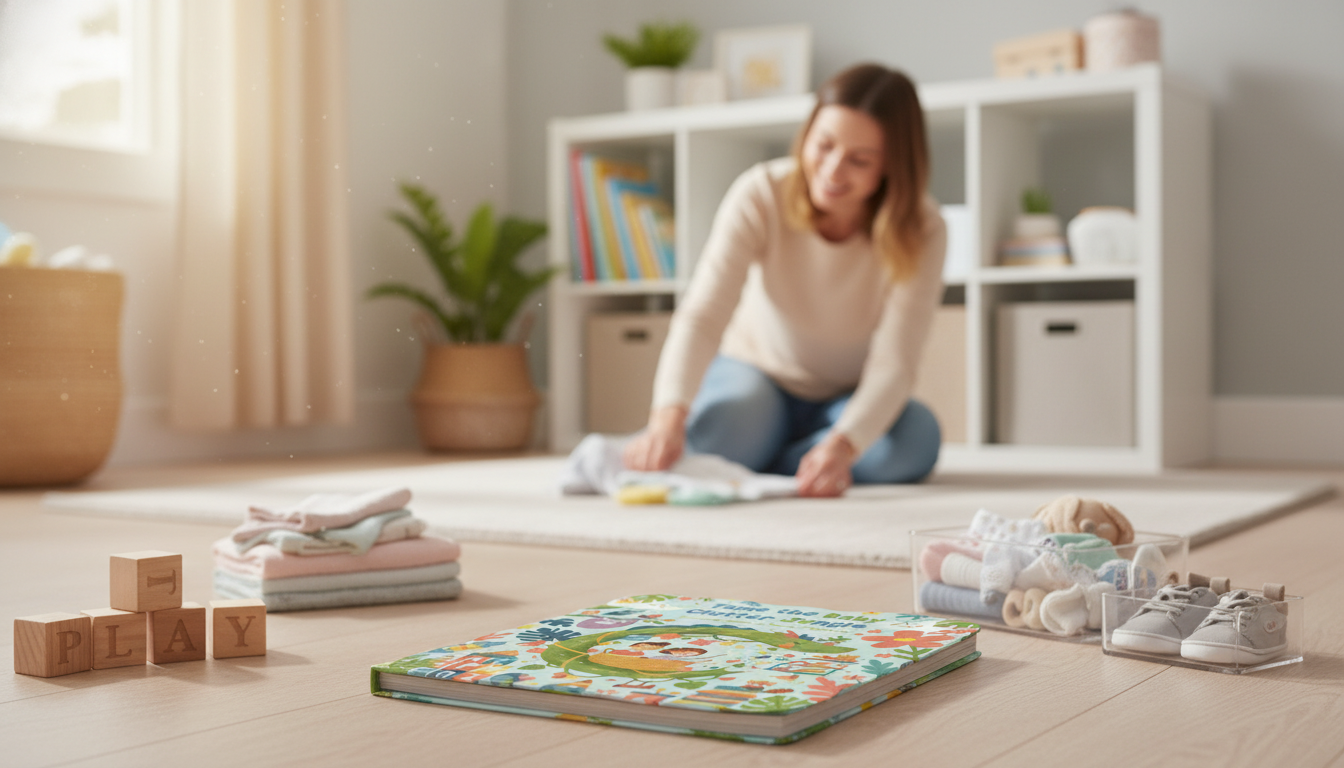
- Living room: designate one baby zone (play mat + toy basket). Everything else returns to a closed bin or cabinet at day’s end.
- Kitchen: create a feeding station (bottles, formula, bibs) and remove rarely used baby appliances from countertops.
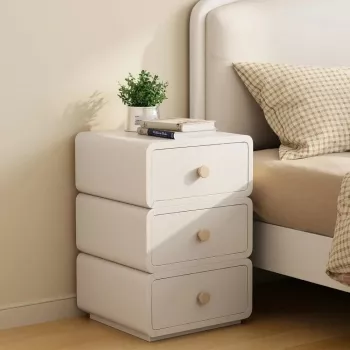
- Bedroom: keep nighttime essentials within arm’s reach; move backup supplies to a closet shelf to reduce bedside overflow.
- Bathroom: corral bath items into one handled tub so the space can return to adult use quickly.
- Entryway: set up a “launch pad” for diaper bag, stroller accessories, and outgoing donation box to prevent re-piling.
Storage that works with babies (not against them)
- Choose fewer, larger containers over many small ones to reduce micro-sorting and lid clutter.
- Prefer clear bins for “next stage” and opaque bins for visual calm in living areas; label both with broad categories.
- Store by action, not by item type: “changing,” “feeding,” “outdoor,” “sleep,” and “cleaning” makes retrieval faster when tired.
- Go vertical: one tall wardrobe or cabinet can replace multiple scattered piles, especially for linens and seasonal items. A single, closed-storage piece like the Modern minimalist ash wood wardrobe with sliding doors helps consolidate overflow so floors and pathways stay clear.
- Keep a hard limit for keepsakes: one memory box per child; if it’s full, trade something out instead of expanding.
A maintenance rhythm that survives growth spurts and gifts
- Daily (2 minutes): reset one surface and return loose items to the nearest labeled bin.
- Weekly (10 minutes): empty the roaming bin; re-home, donate, or add to the “parking spot” for one more week only.
- Monthly (20 minutes): check clothing sizes, rotate “next stage” tote, and release anything unused for 30 days (except true safety backups).
- Gift inflow rule: one-in, one-out for toys and books; keep packaging out of the house to prevent “return later” piles.
For an extra layer of peace of mind, keep exit routes and heaters clear and make sure smoke alarms remain accessible; the NFPA home fire safety guidance is a helpful reference when resetting crowded spaces.
When clutter is emotionally loaded
A guided plan for the full reset
If you want a ready-to-follow reset you can open anytime, the Tame the Baby Clutter Jungle digital guide is designed to turn quick cleanups into a simple, maintainable rhythm.
FAQ
How do diapers, clothes, and toys take over so fast?
Baby stuff pours in from multiple directions at once—gifts, hand-me-downs, backups, and rapid stage changes—while decision fatigue makes it easy to stack items “for later.” Container limits plus a regular outflow routine (donate/sell box by the exit, monthly size checks) keep the volume from creeping back.
What should be kept within reach vs stored away?
Keep daily-use essentials in the zones where you use them (changing caddy, feeding station, nighttime basics), store weekly-use items on one shelf per category, and keep “next stage” items in a single dated tote. This reduces rummaging during diaper changes, night feeds, and quick outings while keeping pathways clear.
How can baby clutter be controlled without spending hours organizing?
Rely on short bursts: a 15-minute safety-and-sanity reset, the roaming bin to remove visual noise, and the “two touches” rule to stop reshuffling. A simple daily/weekly/monthly rhythm keeps the system working even during growth spurts and gift-heavy seasons.
Recommended for you









Leave a comment