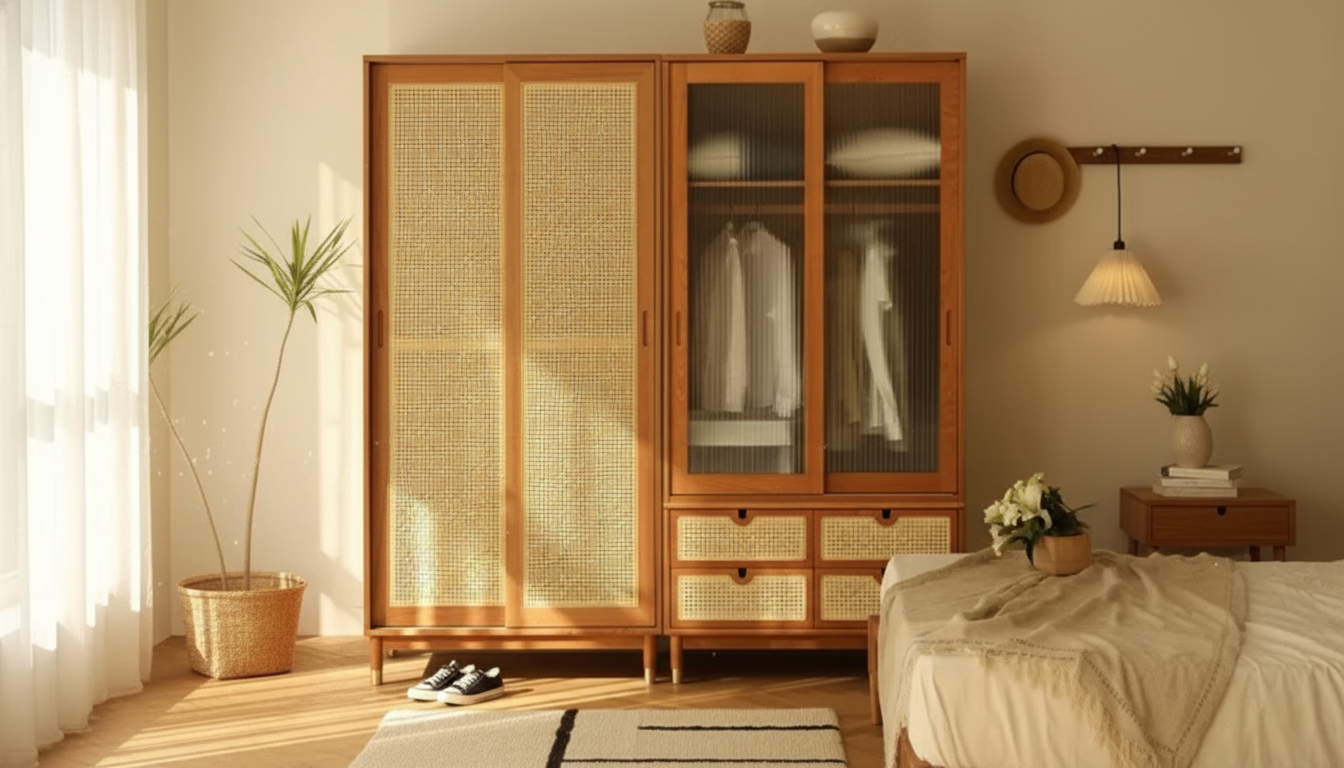
A streamlined wardrobe can do more than store clothes—it can define the tone of a bedroom. This modern minimalist ash wood wardrobe pairs warm, natural grain with artistic glass sliding doors for a lighter visual footprint, smoother daily access, and a refined, gallery-like look that works especially well in contemporary and Japandi-inspired spaces.
Minimalism doesn’t have to feel cold. With ash wood, the room keeps its warmth while the overall form stays clean and quiet—ideal for bedrooms where visual clutter can make a space feel smaller.
For more minimalist room cues, curated design references can help guide finish choices and balance; see ideas from Architectural Digest.
Ash is known for its energetic grain pattern—distinct enough to read as real wood, but crisp enough to sit comfortably in modern rooms. Its lighter tone can also make bedrooms feel brighter than darker walnut or espresso finishes, especially in spaces with limited daylight.
If you like to compare species characteristics (hardness, grain, and typical uses), the profile at The Wood Database is a helpful overview.
| Component | What to check | Why it matters |
|---|---|---|
| Ash wood surfaces | Even color tone and consistent grain | Creates a cohesive, premium look across large panels |
| Glass door panels | Edge finishing and panel stability | Improves safety and keeps the doors looking refined over time |
| Sliding track hardware | Smooth glide and solid mounting | Reduces noise, wear, and door misalignment |
| Interior shelving/rails | Rigidity and secure brackets | Prevents sagging and improves daily usability |
Artistic glass panels are a smart middle ground between solid doors and fully transparent fronts. They bring in light and dimension while keeping most of the interior discreet—especially important if your wardrobe sits in a prominent sightline.
To keep the glass looking intentional (not busy), aim for one “feature” element nearby—like a textured rug or linear wall art—then keep other finishes calm and matte.
A minimalist exterior looks best when the interior supports quick resets. When shelves are overstuffed or zones aren’t planned, doors tend to stay open longer—undoing the clean, gallery-like effect.
A practical tip for glass-front wardrobes: treat any area that might be faintly visible as “display storage.” One or two consistent bin styles can make shelves look calm even when they’re full.
Sliding doors are a space-saver, but they also change how a room flows. Instead of planning for a door swing, you plan for a comfortable lane in front of the wardrobe—simple, predictable, and easy to live with.
Minimalist pieces tend to show dust and smudges faster—mostly because the surfaces are uninterrupted. A quick, consistent routine keeps the ash grain crisp and the glass panels clear.
Keep the tracks clean so the doors glide evenly, wipe glass regularly to prevent haze, and balance reflections with softer nearby finishes (matte paint and warm lighting). A tidy interior and matching hangers also help if the glass is partially see-through.
Pricing varies widely by size, materials, and hardware quality, with glass treatments and quieter track systems typically increasing the total. Also factor in delivery and assembly, especially for larger units or tight access routes.










Leave a comment