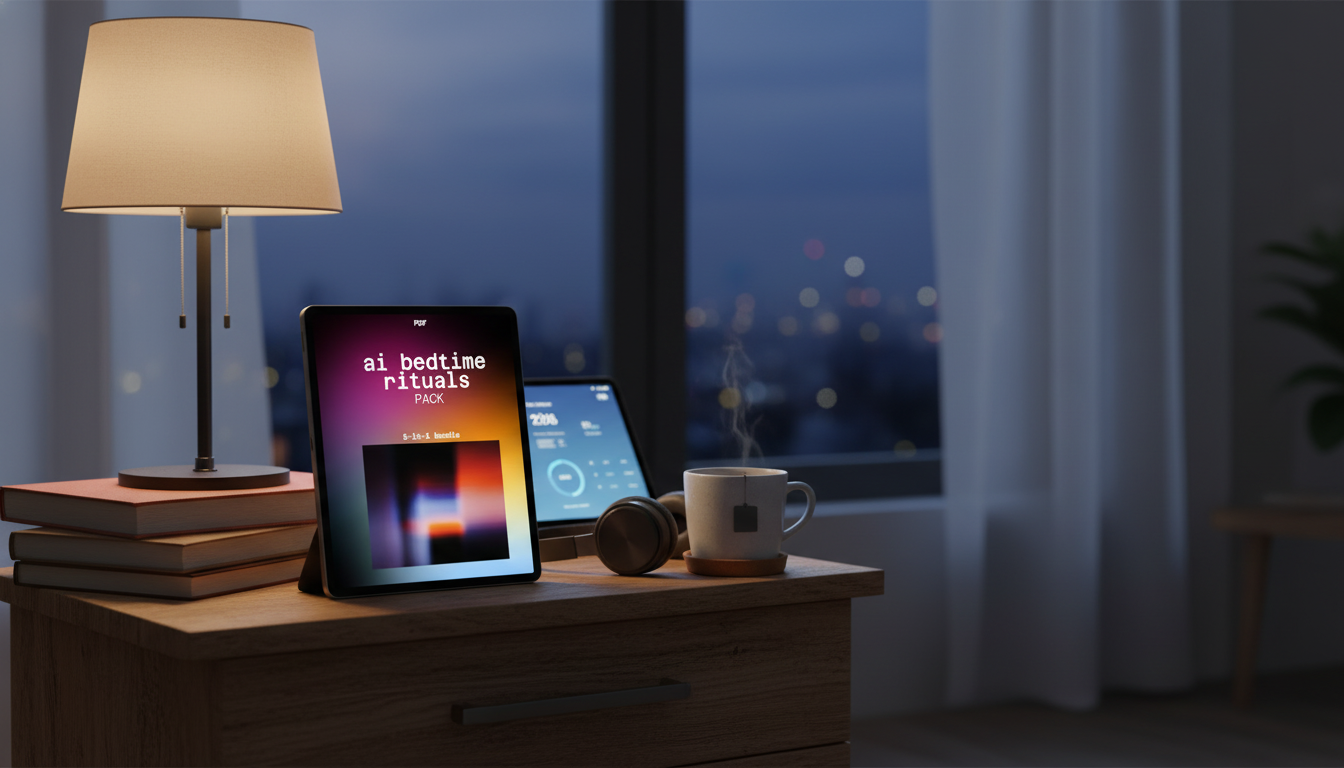
A consistent wind-down can make it easier to fall asleep and wake feeling restored, but building the right routine is often the hard part. Sleep hygiene sets the conditions for sleep, while a bedtime ritual gives your brain a predictable “off-ramp” from the day. With a little structure—and a light touch of AI—you can turn scattered tips into a calming, repeatable sequence that fits real evenings (including the messy ones).
A bedtime ritual is a repeatable sequence of small actions that signals your brain and body to shift from alert to restful. The point isn’t perfection; it’s predictability. When the same cues happen in roughly the same order, your body starts to anticipate sleep.
It helps to separate two ideas:
Timing, light exposure, and stimulation level strongly affect sleep onset and perceived sleep quality. Bright light late at night can keep you feeling “on,” and stimulating content can pull you back into problem-solving mode. Small changes repeated nightly often beat occasional “perfect” nights because your nervous system learns the pattern—and patterns are what rituals run on.
Before you fine-tune your steps, set the stage. A strong routine won’t fully compensate for a bedroom that keeps waking you up.
| Component | Best timing window | Why it helps | Simple example |
|---|---|---|---|
| Light dimming | 60–90 minutes before bed | Reduces alerting signals from bright light | Switch to lamps; lower brightness |
| Digital cutoff | 30–60 minutes before bed | Cuts stimulation and doomscrolling loops | Phone on charger outside bedroom |
| Warm shower/bath | 60–90 minutes before bed | Supports a post-bath temperature drop that can promote sleepiness | 10-minute warm shower + comfortable pajamas |
| Journal/brain dump | 20–40 minutes before bed | Moves worries and tasks out of working memory | 3 bullets: worries, tasks, tomorrow’s first step |
| Breathing/relaxation | 5–15 minutes before bed | Downshifts arousal and slows racing thoughts | 4-7-8 breathing or box breathing |
For more on core sleep hygiene principles, see the CDC’s sleep resources and the National Sleep Foundation’s sleep hygiene guidance.
AI is most helpful when it reduces decision fatigue rather than adding another “system” to manage.
If you want a medical perspective on healthy sleep habits, the American Academy of Sleep Medicine’s Sleep Education hub is a strong reference point.
The AI Bedtime Rituals Pack – Sleep Hygiene and Wind-Down Planning with AI (5-in-1) is a set of ready-to-use planning tools designed to generate routines, scripts, and checklists that align with sleep hygiene basics—without turning bedtime into a project.
A practical setup flow that tends to stick:
Weekly cadence matters: once a week, review what worked, adjust one variable at a time, and keep the routine easy to start. If clutter or visual noise in the bedroom adds background stress, improving storage can help the environment match the ritual—options like the Modern Minimalist Ash Wood Wardrobe with Artistic Glass Sliding Doors can support a calmer, more “sleep-only” space.
Most people do well with 30–90 minutes, depending on how stimulated they feel at night and how much time their schedule allows. If evenings are tight, a 10–15 minute “minimum viable” routine (dim lights, quick hygiene, 5 minutes of breathing) can still create a reliable sleep cue.
A baby wind-down routine is a calm, consistent sequence such as diaper, feeding, bath (if appropriate), a short story or song, then lights out at a similar time each night. Keep cues gentle and predictable, follow safe sleep guidance, and check with a pediatrician if sleep or feeding issues persist.












Leave a comment