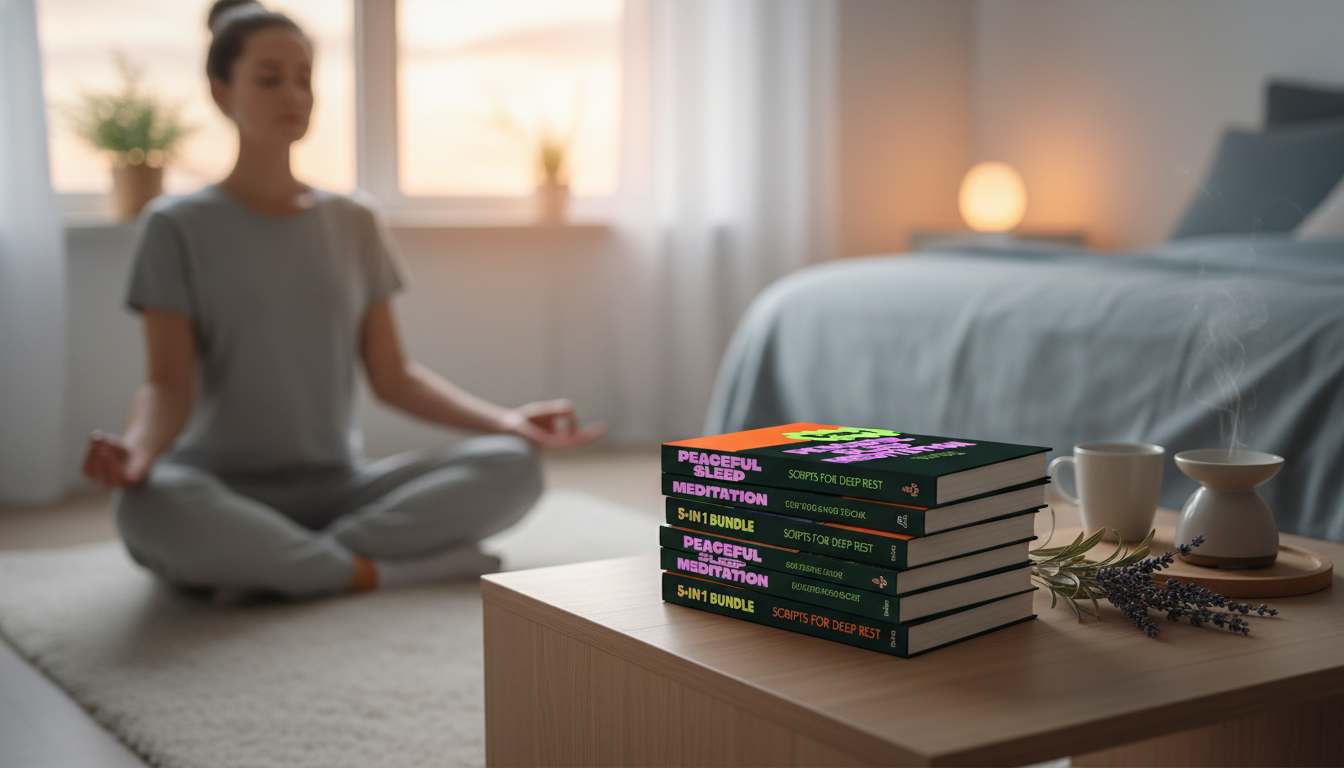
A calmer bedtime routine can be learned, practiced, and repeated—without complicated gear or long sessions. The Peaceful Sleep Meditation Toolkit for Deep Rest – 5-in-1 Bundle of Guides & eBooks is a digital set built for real nights: low-energy evenings, busy schedules, and those “my mind won’t stop” moments. Instead of pushing willpower, it leans on simple cues, written scripts, and repeatable steps that help the body downshift toward rest.
Sleep and meditation aren’t the same thing, but they can work well together. Sleep cycles support essential brain and body functions, while meditation practices often reduce arousal and stress that keep people awake. For a helpful foundation on sleep basics, see the National Institute of Neurological Disorders and Stroke overview of sleep, plus the NIH NCCIH review on meditation and mindfulness.
Written scripts are especially useful if audio feels overstimulating, if headphones are uncomfortable, or if a quiet “read and follow” routine fits better with a shared bedroom. Many people also like written guides because they make it easier to repeat the same steps nightly—one of the quickest ways to build a dependable pre-sleep cue.
| Component | Purpose | Best Time to Use |
|---|---|---|
| Guide/eBook #1 | Foundational bedtime meditation structure | 30–60 minutes before sleep |
| Guide/eBook #2 | Body relaxation and tension release techniques | Right after getting into bed |
| Guide/eBook #3 | Breath-led calming practices | When thoughts are racing |
| Guide/eBook #4 | Night waking reset scripts | If waking up during the night |
| Guide/eBook #5 | Consistency plan and reflection prompts | Daily or weekly routine check-ins |
A practical approach is to pick two “default scripts”: one for getting to sleep and one for waking up at 2 a.m. That way, the decision is already made—no negotiating with yourself in the dark. If reading on a device, reduce brightness and consider a warm color setting to keep the environment gentle on the eyes.
These skills tend to work best when they’re treated like “training wheels” for the nervous system: simple, repeatable, and low-pressure. If the mind wanders, the practice is just returning—without turning it into a problem to solve.
If sleep problems are persistent, it can also help to learn evidence-based sleep hygiene basics and when to seek professional support. The American Academy of Sleep Medicine’s Sleep Education resources are a solid starting point for general guidance.
If you’re also shaping a calmer bedroom vibe, consider storage that reduces visual clutter (one less source of “busy” signals at night). The Modern Minimalist Ash Wood Wardrobe with Artistic Glass Sliding Doors can support a cleaner, more restful space. And for anyone noticing stress in the home—especially pet-related nighttime disruptions—the guide How to Tell if Your Cat is Stressed: The Ultimate Guide to Understanding and Reducing Cat Stress may help you identify patterns that affect the household’s sleep rhythm.
No—meditation and sleep serve different biological functions, and meditation doesn’t replace the sleep cycles your brain and body need. Meditation may reduce stress and make you feel more rested, and it can help some people fall asleep faster or return to sleep more easily after waking.
There isn’t a universal “best” app; the right choice depends on the voice/style you’ll actually use consistently and whether the content is evidence-informed. If apps feel too stimulating at night, written scripts and structured guides can be a simpler, offline-friendly alternative.












Leave a comment