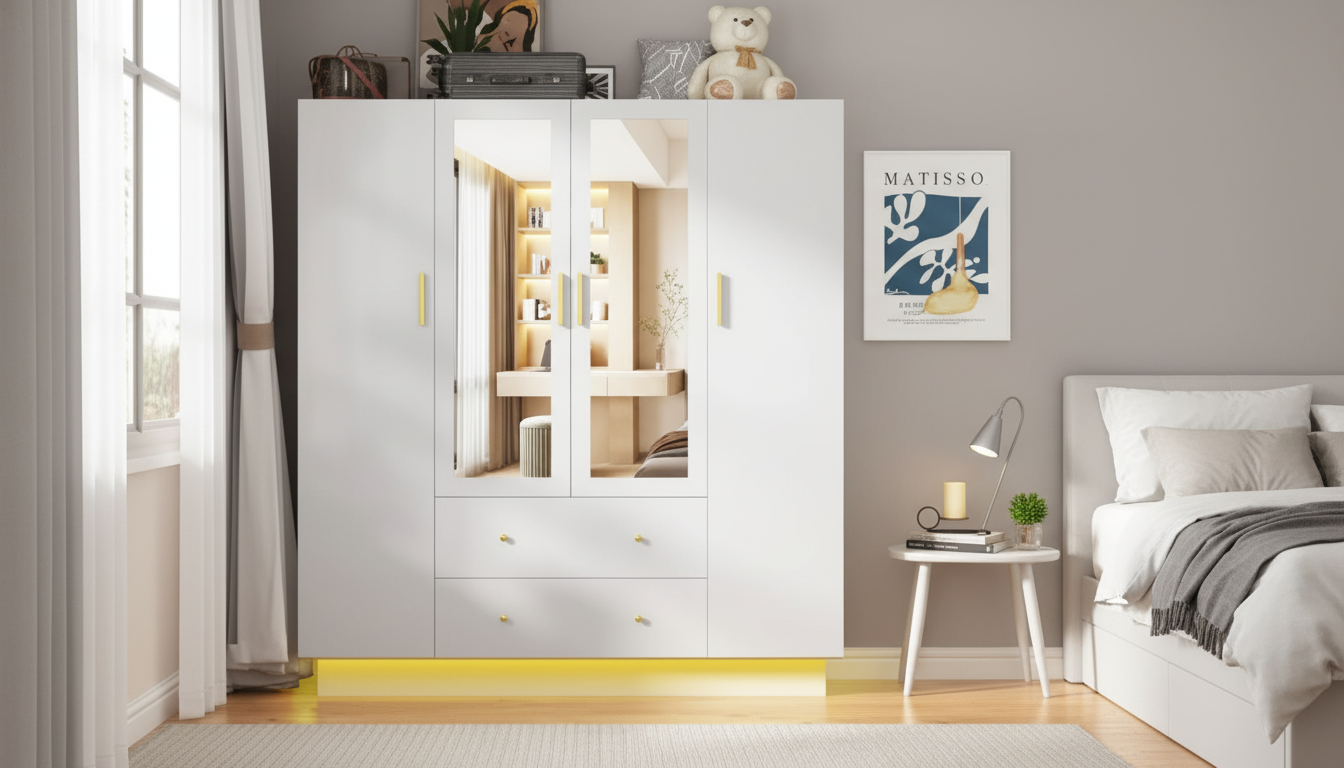
A well-planned wardrobe can replace a dresser, mirror, and closet corner in one footprint. This modern 4-door design pairs mirrored doors with built-in LED lighting, multiple drawers for folded items, and a dedicated hanging section for daily outfits—ideal for bedrooms where clean lines and organized storage matter.
For a storage centerpiece that feels polished and practical, consider the Modern 4-Door LED Wardrobe Closet with Mirror, Drawers & Hanging Storage. If you prefer a premium statement piece with a different door style, the Modern Minimalist Ash Wood Wardrobe with Artistic Glass Sliding Doors is another in-stock option with a sleek, architectural look.
What Makes This Wardrobe a Smart Upgrade
- Four-door layout: Separates hanging, folded, and accessory zones so mornings feel less hectic.
- Mirror-front doors: Makes outfit checks easy without adding a separate full-length mirror.
- Integrated LED lighting: Brightens shadowy corners so darker clothing and back shelves are easier to see.
- Built-in drawers: Keeps small items—socks, tees, undergarments, belts—off open surfaces and out of visual clutter.
- Modern profile: Clean lines that pair well with minimalist, contemporary, and transitional bedrooms.
Storage Layout at a Glance
The most satisfying wardrobes are the ones that give every category a “home.” A dedicated hanging zone protects fabrics from wrinkles, drawers keep personal items private, and shelves handle folded stacks that don’t belong on hangers.
- Hanging storage keeps coats, dresses, and shirts wrinkle-free and easy to grab.
- Drawers provide private, dust-free storage for underwear, gym wear, and accessories.
- Shelved areas (behind doors) suit folded sweaters, linens, handbags, or storage bins.
- Mirrored panels can visually expand smaller rooms by reflecting light.
Common Uses by Storage Type
| Storage area |
Best for |
Organization tip |
| Hanging section |
Jackets, dresses, button-downs |
Group by category, then color; keep frequently worn items at eye level |
| Top shelves |
Bedding, seasonal items, bags |
Use labeled bins for off-season pieces |
| Middle shelves |
Folded tees, jeans, sweaters |
Stack by type; add shelf dividers if piles slump |
| Drawers |
Undergarments, socks, accessories |
Use small drawer organizers to prevent mixing |
| Mirror doors |
Outfit checks, room brightening |
Position across from a window or lamp for better bounce light |
LED Lighting: Practical, Not Just Decorative
Built-in LEDs aren’t only for show. They solve a common bedroom problem: overhead light that doesn’t reach inside a deep wardrobe, especially when the room is dim in early mornings or late nights.
- Better visibility: Helps you see into back corners and identify pieces without pulling everything forward.
- Truer color matching: A more consistent light source reduces the chance of grabbing mismatched blacks, navies, or browns.
- Cleaner look: Feels more intentional than clip-on or stick-on lights that can sag or peel over time.
- Setup planning: Before assembly, confirm a nearby outlet and decide how the cable will route so it stays neat.
For healthier everyday use, good lighting also supports a comfortable bedroom environment. If you’re sensitive to stuffy rooms or odors, it can help to review basic indoor air practices like ventilation and humidity control from the EPA’s indoor air quality guidance.
Mirrored Doors: Room-Saving and Room-Expanding
Mirrored doors do double duty: they eliminate the need for a separate standing mirror and help small rooms feel more open by reflecting ambient light.
- Frees floor space: No extra mirror to tuck behind a door or squeeze beside a dresser.
- Brightens compact bedrooms: Reflective surfaces bounce light and can make the room feel less cramped.
- Convenient placement: Works well near a vanity area or next to a hamper for quick outfit swaps.
- Impact awareness: Avoid tight hallways or door-swing zones where frequent bumps could stress the mirror panels.
Placement and Room Planning
A wardrobe performs best when it’s installed where doors can open freely and drawers can slide without colliding with a bed frame, nightstand, or rug edge.
- Measure carefully: Confirm wall width, ceiling height, and clearance for door swing before ordering.
- Front clearance matters: Leave enough room to open doors fully and pull drawers comfortably while still keeping a walkable path.
- Choose a flat wall: A level surface reduces alignment headaches and helps doors close cleanly.
- Avoid moisture: Keep away from direct humidity sources (like unvented bathrooms or constantly running humidifiers) to protect finishes.
Assembly and Setup Notes
- Plan for two-person assembly: Especially for lifting, aligning, and hanging doors.
- Sort hardware first: Group screws, cams, rails, and brackets by step to prevent mid-build confusion.
- Use a level: Even slight tilt can cause doors to look uneven or drawers to drift.
- Anchor when recommended: Tall furniture is safer when secured; follow tip-over guidance like the CPSC furniture safety recommendations.
- Finish clean: Wipe mirror surfaces with a non-abrasive cloth to prevent micro-scratches.
Care and Everyday Maintenance
When This Wardrobe Fits Best
Explore In-Stock Wardrobe Options
FAQ
Does the LED lighting need to be hardwired?
Typically, built-in wardrobe LEDs are plug-in rather than hardwired, which simplifies setup. Plan for a nearby outlet and route the cord neatly per the included instructions so the finished look stays streamlined.
How much space is needed in front of the wardrobe for the doors and drawers?
Measure for full door swing plus the distance drawers extend when opened, then add comfortable standing room so you can access everything without bumping nearby furniture. It’s also smart to check for conflicts with bed frames, nightstands, and area rugs.
Are mirrored doors harder to maintain than standard panels?
Mirrored doors show fingerprints more easily, but they’re quick to clean with a microfiber cloth and gentle glass cleaner. Avoid abrasive pads or gritty paper towels that can create fine scratches.
Recommended for you








Leave a comment