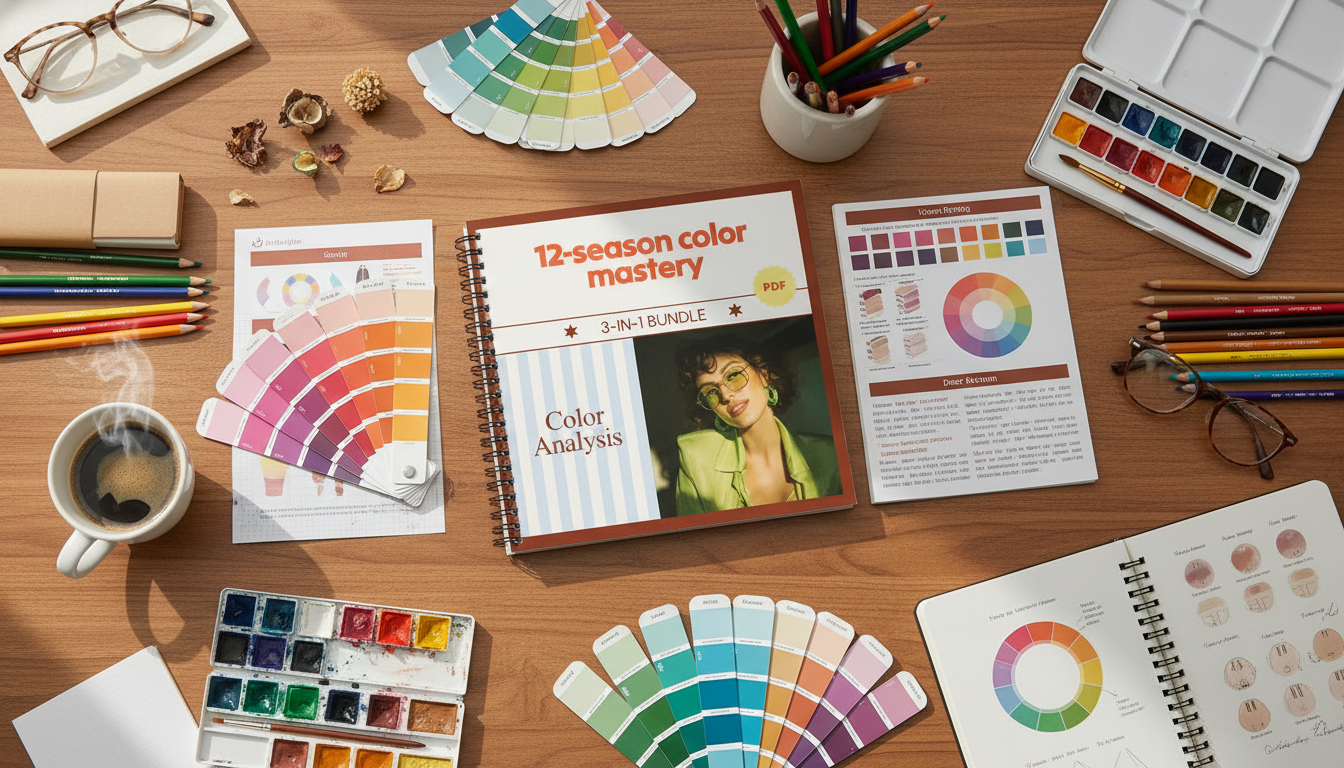
Seasonal color analysis gets dramatically easier when you stop guessing and start comparing the right variables in the right order. A 12-season approach looks at undertone, depth, and intensity together so your clothing, makeup, and accessories feel cohesive—without constant trial-and-error purchases that “should” work but never quite do. For more guidance, see [PDF] Auraria Campus Design Guidelines.
If you want a ready-to-use reference while shopping or building outfits, the 12-Season Color Mastery Blueprint | 12 season color analysis 4-in-1 Color Guide Bundle is built to narrow choices to a repeatable palette you can trust. For further reading, see Bioinspired Multifunctional and Dynamic Color-Tuning Photonic ….
The classic “4 seasons” (Spring, Summer, Autumn, Winter) is a helpful starting point, but it can feel too broad in real life. The 12-season system keeps the same four families and adds nuance inside each one—so you can distinguish light vs. deep, warm vs. cool, and soft vs. bright within the same family.
Most modern seasonal methods revolve around three core variables:
Keep expectations realistic: a season is a practical style tool, not a strict rulebook. Some crossover with neighboring seasons is normal—especially for accent colors and “not-near-the-face” pieces like shoes.
| Season family | Temperature | Value | Chroma |
|---|---|---|---|
| Spring | Warm | Light to medium | Clear/bright |
| Summer | Cool | Light to medium | Soft/muted |
| Autumn | Warm | Medium to deep | Soft/rich |
| Winter | Cool | Medium to deep | Clear/high-contrast |
This bundle uses a 4-in-1 format designed for quick reference while you’re doing a closet edit, building outfits, or choosing cosmetics. Instead of relying on memory (or re-learning your palette every time you shop), you get consolidated guidance you can come back to again and again.
Across all 12 sub-seasons, palettes are typically organized around:
The usability win is decision fatigue reduction: when your closet starts to harmonize, getting dressed becomes more formula-driven and less like a daily experiment.
| Use case | What to look for | Result |
|---|---|---|
| Closet edit | Neutrals + core colors that repeat | More mix-and-match outfits |
| Shopping | Season-friendly shades in store lighting | Fewer unworn purchases |
| Makeup selection | Lip/cheek/eye tones aligned to undertone | More natural-looking harmony |
| Hair color direction | Warmth/coolness and depth guidance | Color that supports complexion |
At-home draping can be surprisingly reliable when you standardize lighting and compare controlled pairs. Indirect daylight matters because color perception changes with illumination and color temperature; references like the CIE (International Commission on Illumination) and educational breakdowns of color temperature from Pantone are useful reminders that “warm vs. cool” isn’t just a vibe—it’s physics plus perception.
The fastest way to make a seasonal palette feel real is to build from neutrals first. Choose 2–3 neutrals that match your temperature and depth (for example: warm camel vs. cool charcoal), then add accent colors that repeat across categories.
To keep your wardrobe organized once you’ve edited it, a dedicated storage piece can help you group “in-season” colors together for quicker outfit building—like the Modern Minimalist Ash Wood Wardrobe with Artistic Glass Sliding Doors.
Makeup tends to “click” when it follows the same temperature and intensity rules as your clothing. Use family-level direction first, then refine once you know your sub-season.
If you like planning outfits around events, pairing your palette with a quick outfit planner can make shopping and styling faster—try the Concert Outfit Cheat Sheet: Your Ultimate Guide to What to Wear to a Concert for streamlined outfit formulas.
Start by determining warm vs. cool undertone, then decide whether your overall coloring reads lighter or deeper, and finally test whether you handle muted vs. bright colors better. Use indirect daylight, no heavy makeup, and a few controlled comparisons (gold vs. silver, cream vs. white, clear vs. dusty) to confirm the closest 12-season sub-season.










Leave a comment