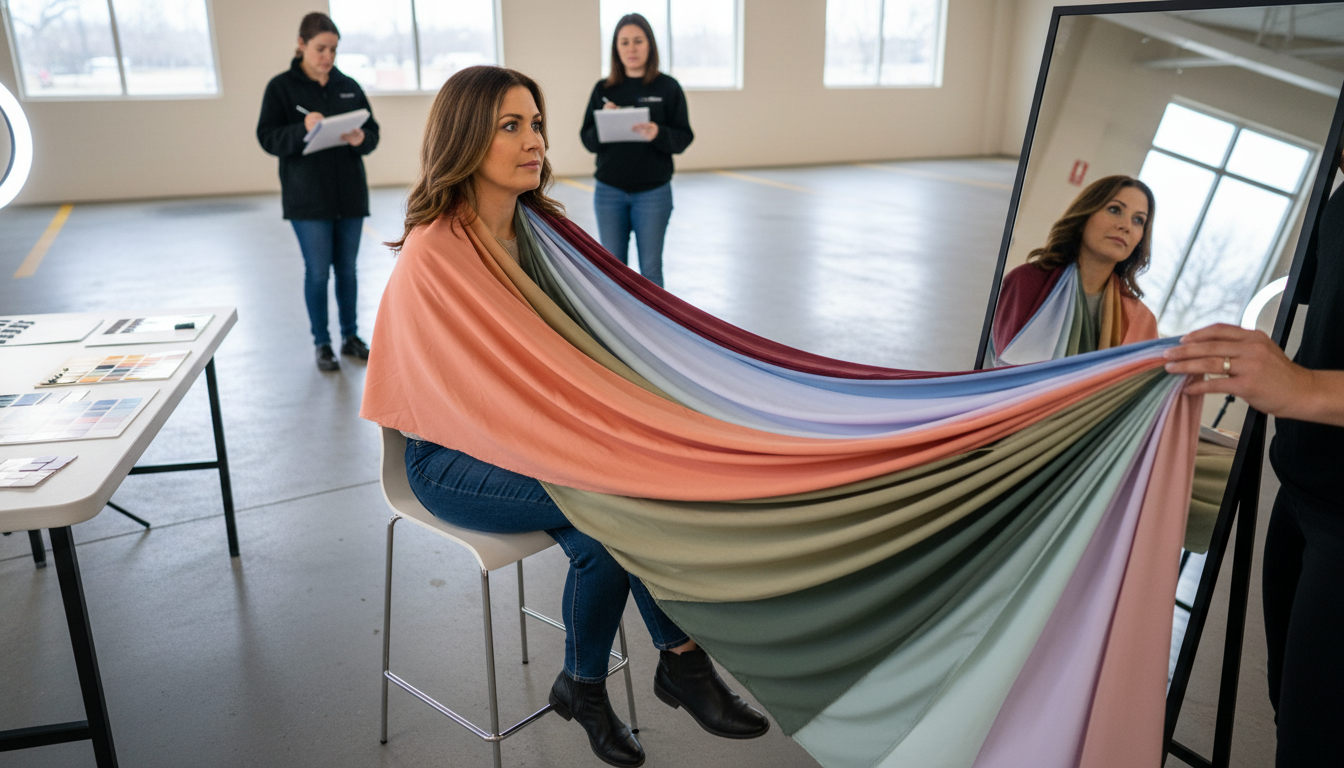
“What season am I?” color analysis is a method for finding the group of colors that naturally flatter your complexion, hair, and eyes. Instead of chasing trends, it focuses on how color interacts with you—making skin look clearer, eyes brighter, and features more balanced. Most modern systems use 12 seasons (four main seasons plus three variations each): Spring (warm/light/bright), Summer (cool/light/soft), Autumn (warm/deep/muted), and Winter (cool/deep/bright).
Start with three core traits: undertone (warm vs. cool), value (light vs. deep), and chroma (clear/bright vs. soft/muted). Warm undertones usually suit gold jewelry and creamy off-whites; cool undertones often look better in silver and crisp white. Light value tends to harmonize with pale or medium-light colors; deep value looks stronger in richer, darker shades. Bright/clear complexions handle saturated colors well, while soft/muted coloring is enhanced by dusty, blended tones.
Try comparing two items near your face in natural daylight: a warm peach vs. cool rose, camel vs. charcoal, ivory vs. pure white. The better option will reduce shadows, even out redness, and make your features look “lifted” rather than dulled. Also notice which colors you consistently get compliments in—those often align with your season’s temperature and intensity.
Once you identify your season, you get a ready-made palette for clothing, makeup, and even hair color direction. For example, many Springs shine in warm, fresh shades, while many Winters pop in high-contrast, cool, vivid colors. The right palette can make basics easier to buy, help build a cohesive wardrobe, and reduce returns from “almost right” shades.
For a clearer breakdown of all 12 seasons and how they differ, see the full guide here: 12-season color analysis made easy.
Some tools and apps offer photo uploads, but results can be unreliable if lighting, camera filters, or white balance shift your skin tone. Use natural daylight, no makeup, and a neutral background for the most accurate outcome, then confirm with fabric comparisons in real life.











Leave a comment