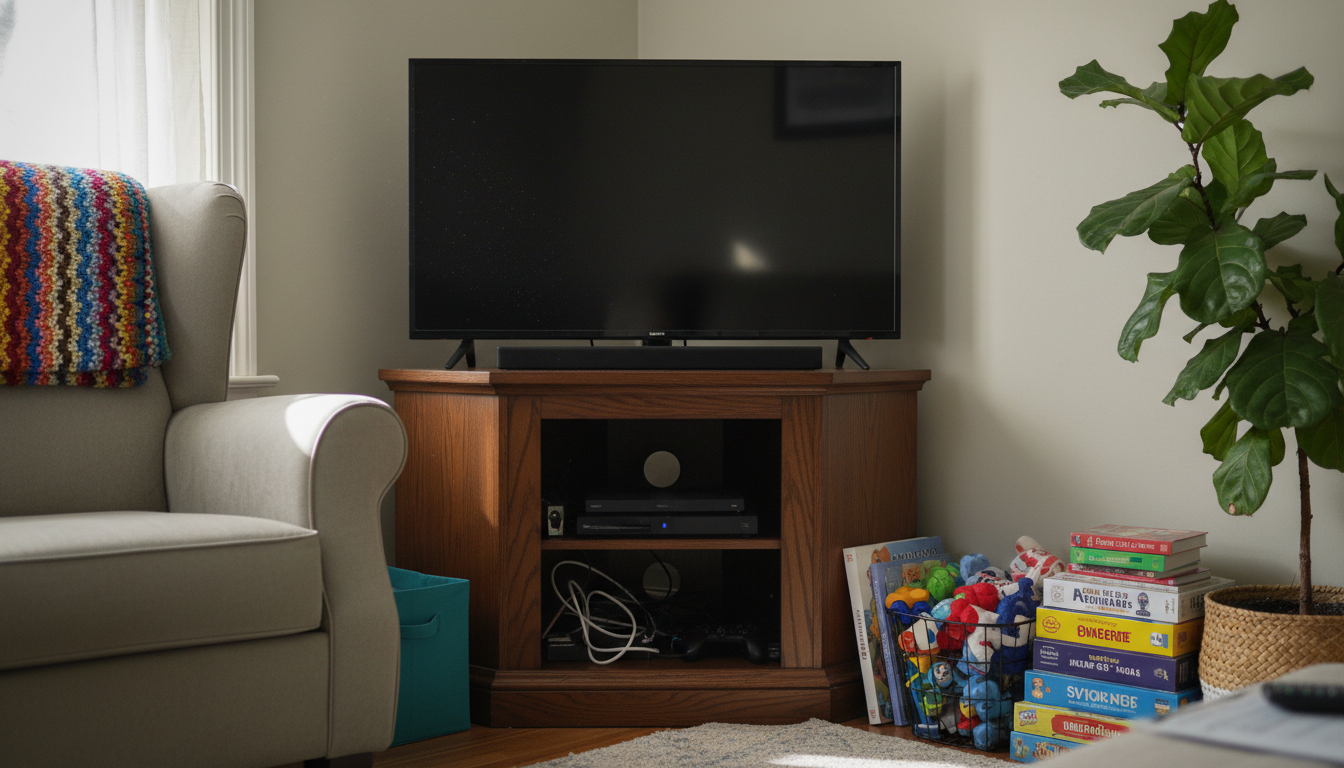
Corner TV stands can be a very good option when the goal is to make a room feel more open, especially in smaller living rooms, bedrooms, apartments, or any space where wall length is limited. By using a corner that might otherwise sit empty, they help reclaim floor area and can improve traffic flow around seating and walkways.
They’re also practical for layout flexibility. A corner placement can reduce screen glare from windows on long walls, and it can create a centered viewing angle in rooms where the furniture naturally gathers at an angle. Many designs include open shelves or cabinets that keep streaming devices, game consoles, and remotes organized without needing a separate media console.
A corner TV stand shines when the room has an awkward footprint (like a narrow rectangular space) or when doors, vents, fireplaces, or built-ins break up the usable wall area. It’s also a smart choice if a full-length media console would feel bulky or if the TV needs to sit lower than a wall mount for comfort.
The biggest limitation is size and compatibility. Not every corner stand supports large TVs or wide “TV feet” spacing, and some corners don’t provide enough depth for bigger screens. Cable management can also be trickier if outlets aren’t nearby. Finally, if the best seating position faces a straight wall, a corner placement may force an off-angle view.
Start with the TV’s size and stand width requirements, then measure the corner depth and the clearance needed for doors and drawers to open. Look for sturdy materials, ventilation for electronics, and built-in wire pass-throughs. For more sizing and setup guidance, see this corner TV stand guide.
Match the stand’s rated TV size and weight to your TV, then confirm the top surface is wide enough for the TV’s feet (or center pedestal) with a little extra space for stability. Also measure corner depth so the screen doesn’t protrude too far into the room.











Leave a comment