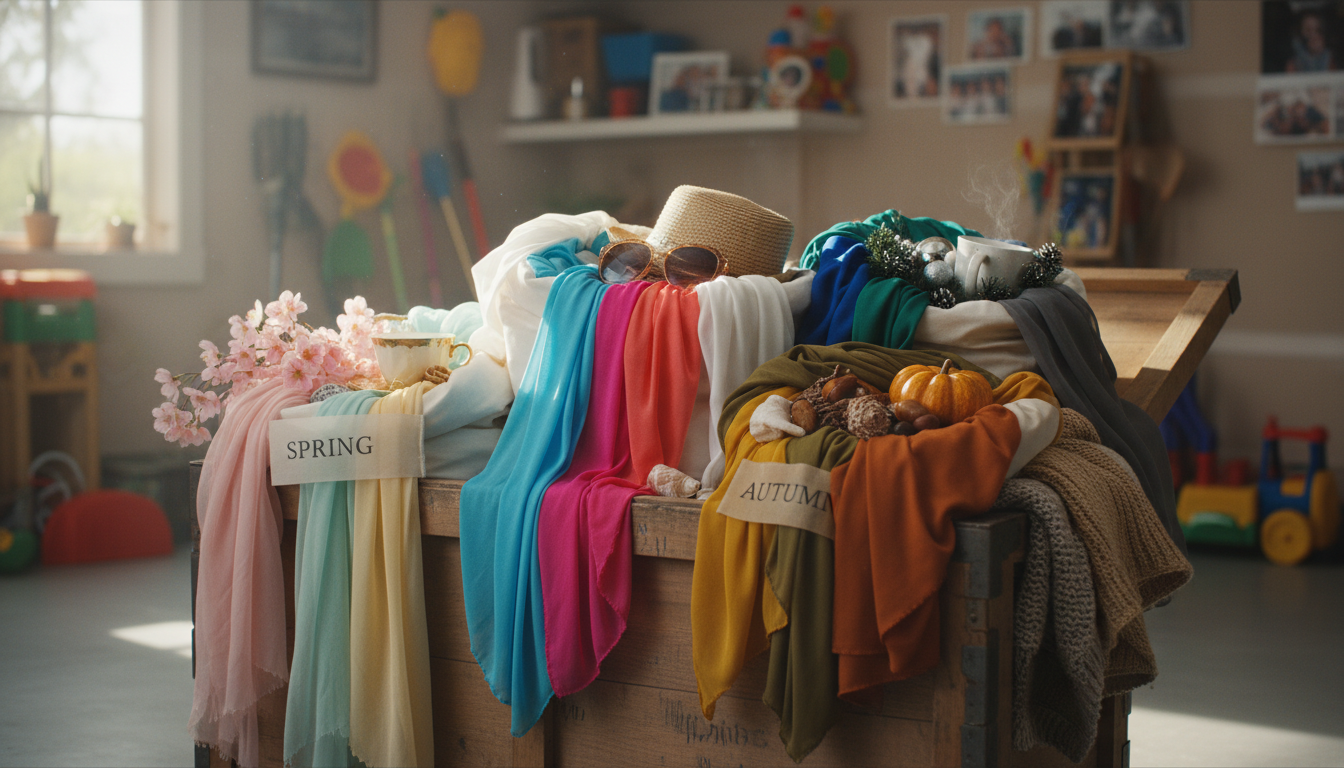
The 4 seasons of color theory are Spring, Summer, Autumn, and Winter. In seasonal color analysis, these “seasons” group people by the overall effect of their natural coloring—typically a blend of skin undertone and surface tone, plus the depth and contrast of hair and eyes. The goal is simple: identify the color family that makes your features look clearer, brighter, and more balanced.
Spring palettes are warm, light, and clear. This season is associated with a fresh, sunny quality—think golden undertones, brighter eyes, and an overall low-to-medium depth. Colors that often flatter Springs include warm peaches, coral, clear aqua, light warm greens, and creamy neutrals (rather than stark white or heavy charcoal).
Summer palettes are cool, light-to-medium, and soft. Many Summers look best in muted, gently blended colors rather than intense saturation. Commonly flattering shades include dusty rose, soft berry tones, powder blue, lavender, and cool gray-based neutrals. The overall effect is calm and smoky rather than sharp or high-contrast.
Autumn palettes are warm, deep-to-medium, and muted. This season pairs earthy richness with softness—more “spice market” than “neon.” Colors that typically work well include terracotta, warm olive, mustard, teal-leaning greens, chocolate brown, and warm beige. Autumn colors tend to feel grounded and golden, not icy or pastel.
Winter palettes are cool, deep, and clear (often with higher contrast). Winters usually shine in crisp, saturated shades and strong neutrals. Think true black and white, cobalt, emerald, fuchsia, blue-red, and icy brights. The best colors tend to look clean and bold rather than dusty or earthy.
For a deeper, step-by-step way to find your season and translate it into everyday outfit and makeup choices, visit this Seasonal Color Analysis guide.
Start by checking whether warm (golden) or cool (rosy) tones look more natural on you, then consider whether you suit brighter clear colors or softer muted ones, plus your overall depth (light vs deep). A structured seasonal color analysis with draping (even using fabric at home) can make the difference obvious.












Leave a comment