
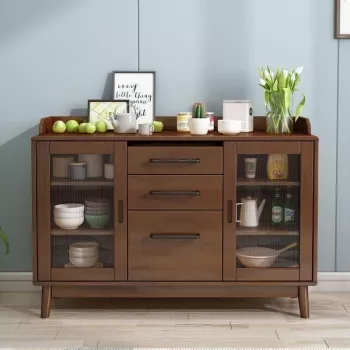
The best sideboard size for a minimalist modern dining room is one that looks intentionally “quiet” in the space while still handling your everyday storage. As a practical rule, choose a sideboard that’s roughly 60–80% of the length of your dining table, and keep the height around 30–36 inches so it aligns with most dining surfaces and feels low-profile.
If your dining table is 72 inches long, a sideboard in the 54–60 inch range typically reads balanced without dominating the room. If it’s a round table, base the sideboard on the wall: leave at least 6–12 inches of breathing room on both sides so the piece feels “placed,” not crammed.
Minimalist rooms look best when traffic flow is effortless. A depth of 16–20 inches is usually ideal for modern dining rooms because it offers useful interior storage without pushing too far into the walkway. If your room is tight, lean closer to 14–16 inches and prioritize internal shelving over bulky drawers.
Most sideboards land between 30 and 36 inches tall. For a minimalist aesthetic, staying on the lower end can help the room feel open, especially under large art or a mirror. If you plan to use the top for serving, 34–36 inches is comfortable for setting platters and barware.
For streamlined dining, a 55–70 inch sideboard often hits the sweet spot: enough space for plates, linens, and a few serving pieces, without encouraging clutter. If you entertain often or store small appliances, consider a longer piece (70–84 inches) and keep the exterior simple—flat fronts, minimal hardware, and clean lines.
For more sizing scenarios and layout tips, visit the full guide here.
Leave about 30–36 inches of clearance in front for comfortable walking and opening doors or drawers. If the sideboard sits near seating, aim for enough room to slide chairs back without hitting the piece.









Leave a comment