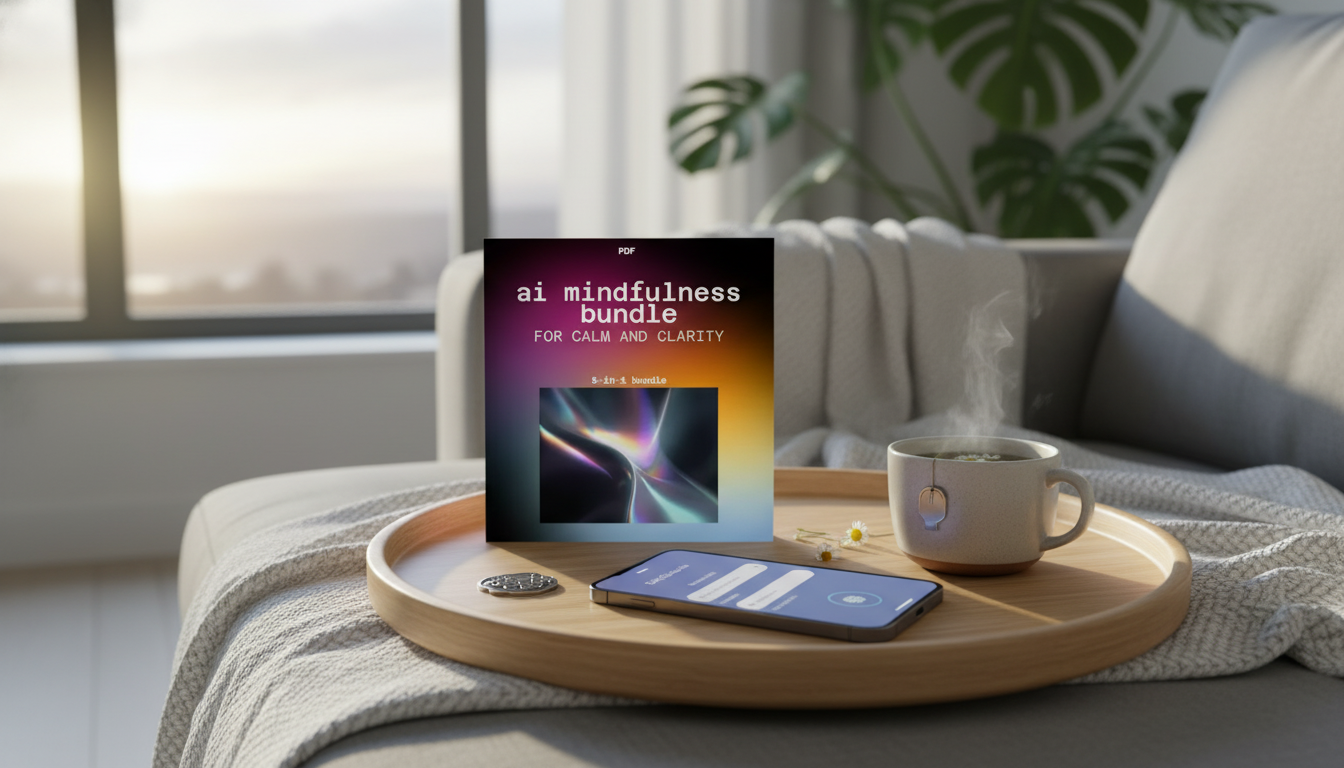
AI Mindfulness Bundle for Calm and Clarity
A guided set of AI-assisted exercises designed to support mindful attention, reflection, and steadier emotional balance. Built for quick check-ins or longer sessions, it helps turn scattered moments into a repeatable practice for calmer days and clearer decisions.
What the Bundle Helps With
- Reducing mental noise by anchoring attention to the present moment
- Building a consistent reflection habit without needing long sessions
- Creating a personal library of insights and patterns over time
- Supporting calmer responses during stress, uncertainty, or transition
- Encouraging values-based choices by clarifying priorities and emotions
How AI Support Fits Into Mindfulness (Without Replacing It)
Mindfulness is still the core skill: noticing what’s happening, as it’s happening, with less automatic reaction. The “AI” layer works best as a steady guide—offering structure when attention is scattered—while keeping the practice grounded in lived experience (breath, body, environment).
- Uses structured guidance to direct attention to breath, body sensations, and thought patterns
- Helps name emotions and identify triggers, which can reduce reactivity
- Offers reflection questions tailored to the moment (work stress, relationships, self-talk)
- Encourages short, repeatable routines that are easier to maintain than occasional long sessions
- Keeps the focus on awareness and agency: choose what resonates and ignore what doesn’t
For a deeper look at how mindfulness supports stress regulation and well-being, see the American Psychological Association (APA) overview of mindfulness and the NCCIH review of meditation and mindfulness effectiveness and safety.
What’s Typically Included in an AI Mindfulness Bundle
- Guided mindfulness sessions (brief resets, longer grounding practices, end-of-day wind-downs)
- Journaling and reflection frameworks (gratitude, cognitive reframes, values check-ins)
- Mood tracking cues and pattern-spotting summaries over time
- Self-compassion scripts for tough moments and inner-critic spirals
- Goal-aligned reflections to connect calmness with daily decisions and habits
Over time, this style of bundle can make mindfulness feel less like a one-off “good idea” and more like a reliable system: check in, notice what’s true, choose a next step, then return to the day with a little more space around your thoughts.
Pick a Session Style That Matches the Moment
Different situations call for different entry points. A 3-minute reset before a meeting and a 12-minute reflection after a hard conversation can both be “real practice,” just aimed at different outcomes.
- Fast reset: 2–5 minutes to settle the nervous system before a call, commute, or task switch
- Grounding: 5–10 minutes to stabilize attention when anxiety or rumination rises
- Reflection: 10–15 minutes to process emotions and choose a next step with clarity
- Evening review: 5–10 minutes to release the day and reduce overthinking at bedtime
- Compassion practice: 3–8 minutes for shame, guilt, or self-judgment loops
Session ideas by time and goal
| Time available |
Best for |
Example prompt |
Outcome to look for |
| 2–3 min |
Quick calm |
“Name 3 sensations in the body and 3 sounds around you.” |
Less urgency; slower breathing |
| 5–7 min |
Stress reset |
“What is the strongest feeling right now? Where is it felt?” |
Reduced tension; clearer focus |
| 10–15 min |
Decision clarity |
“List the options, the fear behind each, and the value you want to honor.” |
More confident next step |
| 5–10 min |
Better sleep |
“What can be released until tomorrow? Write a ‘parking lot’ list.” |
Less mental looping |
A Simple Weekly Rhythm (So It Doesn’t Become Another Task)
Consistency beats intensity. A lightweight rhythm prevents the practice from turning into a perfection project, and it makes it easier to notice small changes—like quicker recovery after stress or less time spent spiraling.
- Daily: one short check-in (morning intention or midday reset)
- 3x per week: a longer reflection session to spot patterns and reframe stress
- Weekly: a review of recurring themes (energy drains, boundaries, self-talk, wins)
- Use “minimum viable practice”: even 2 minutes counts to keep continuity
- Pair with an existing habit (tea/coffee, lunch break, after brushing teeth) for consistency
Who It’s Best For (and When to Consider Other Support)
- Best for: busy schedules, beginners needing structure, and experienced practitioners wanting consistent reflection
- Helpful for: work stress, attention fatigue, overthinking, and emotional clarity
- Not a substitute for clinical care: persistent severe anxiety/depression, trauma symptoms, or crisis situations need qualified professional support
- Consider combining with: therapy, group mindfulness classes, or breathwork for deeper guidance
- Set expectations: aim for steadier awareness and calmer recovery—not constant “perfect calm”
Privacy, Boundaries, and Healthy Use
Bundle Snapshot: Price and Availability
Related Picks (In Stock)
FAQ
Is AI mindfulness useful if meditation feels hard or frustrating?
Yes—structured guidance can remove the “what do I do now?” feeling, offer shorter entry points, and normalize a wandering mind. Consistent, brief check-ins also make progress easier to notice over time.
How often should the bundle be used to notice a difference?
A practical range is 2–10 minutes daily plus a few longer reflections each week. Consistency matters more than duration, and results vary with current stress, sleep quality, and how regularly you practice.
Can it replace therapy or medical care?
No—it’s a supportive self-reflection and mindfulness tool, not a diagnosis or treatment. For persistent or severe symptoms, trauma-related concerns, or any crisis situation, seek qualified professional help right away.
Recommended for you











Leave a comment