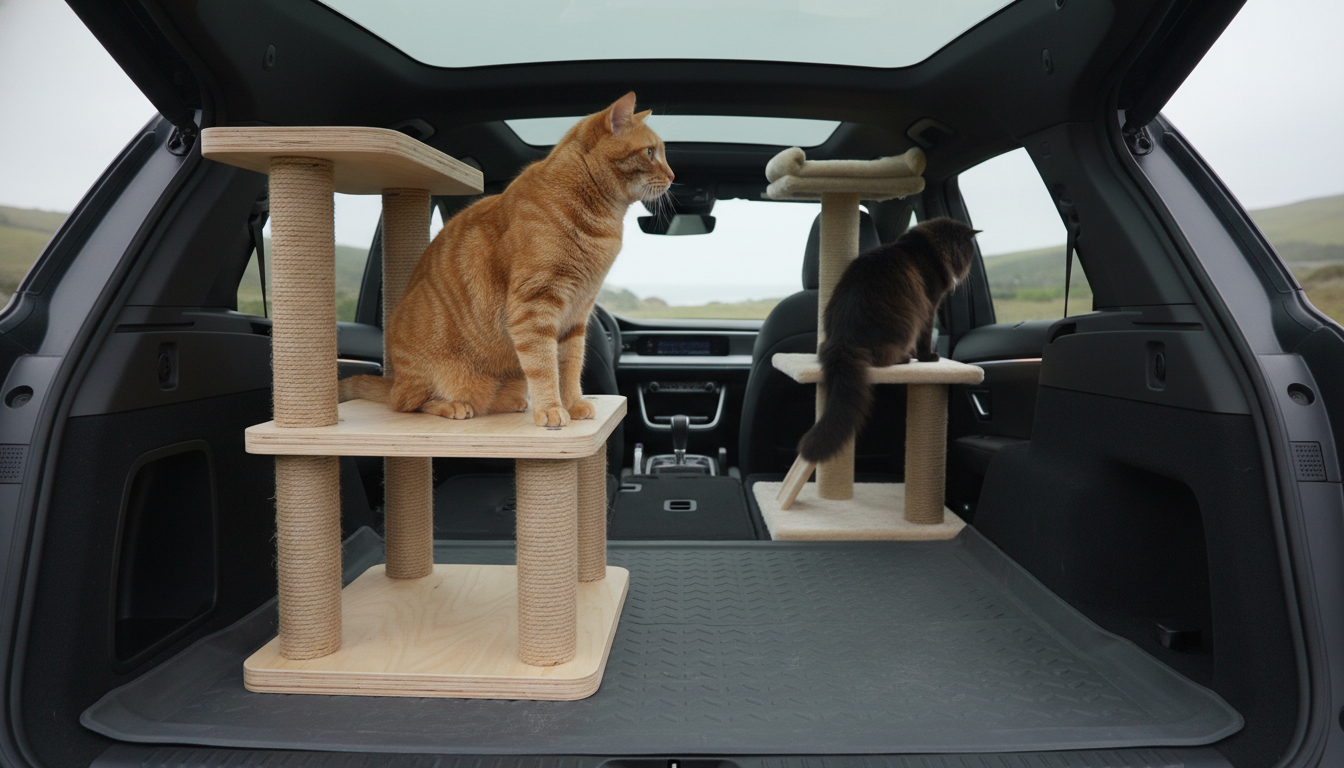
Often, yes—wooden cat towers tend to be more stable for large cats than many carpeted cat trees. The difference usually comes down to structure: wood towers are commonly built with thicker panels, heavier bases, and fewer “wobbly” connection points, which helps them stay planted when a big cat launches upward or shifts their weight on a high perch.
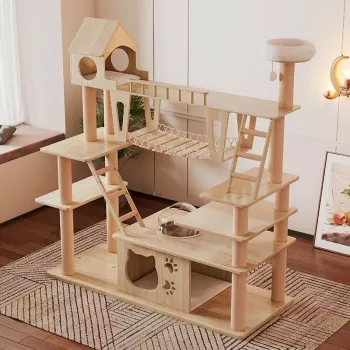
A well-built wooden tower typically uses solid plywood or engineered wood panels and wide platforms. That extra mass lowers the chance of tipping, especially when your cat jumps from the floor to a mid-level shelf. Many wooden designs also rely on box-like construction (vertical sides and flat shelves) rather than tall, narrow posts—another stability advantage for heavier cats.
“Carpeted” doesn’t automatically mean unstable. Some carpeted cat trees are extremely sturdy, particularly models with an oversized base, thick sisal-wrapped posts (4 inches or wider), and multiple points of support between levels. If the tree is tall but has a small footprint or thin posts, large cats are more likely to make it sway.
Stability is less about the surface covering and more about the build: base width and weight, post thickness, hardware quality, and overall height-to-footprint ratio. Look for designs where the top perch isn’t dramatically wider than the base, and where upper platforms are supported from more than one side. Tight, durable fasteners (and the ability to re-tighten them) also make a noticeable difference over time.
For large cats, prioritize a wider base, thicker supports, and roomy platforms. If you’re choosing a tall unit, consider anchoring it to a wall when possible. For a deeper breakdown of materials, construction, and what to look for, read the main guide: https://azimuna.com/blog/is-a-wooden-cat-tower-more-stable-than-a-carpeted-cat-tree-for-cats/.
Choose extra-large platforms, thick posts, and a wide, heavy base. Weight rating, perch size, and multi-point supports matter more than height alone for a big-bodied breed.










Leave a comment