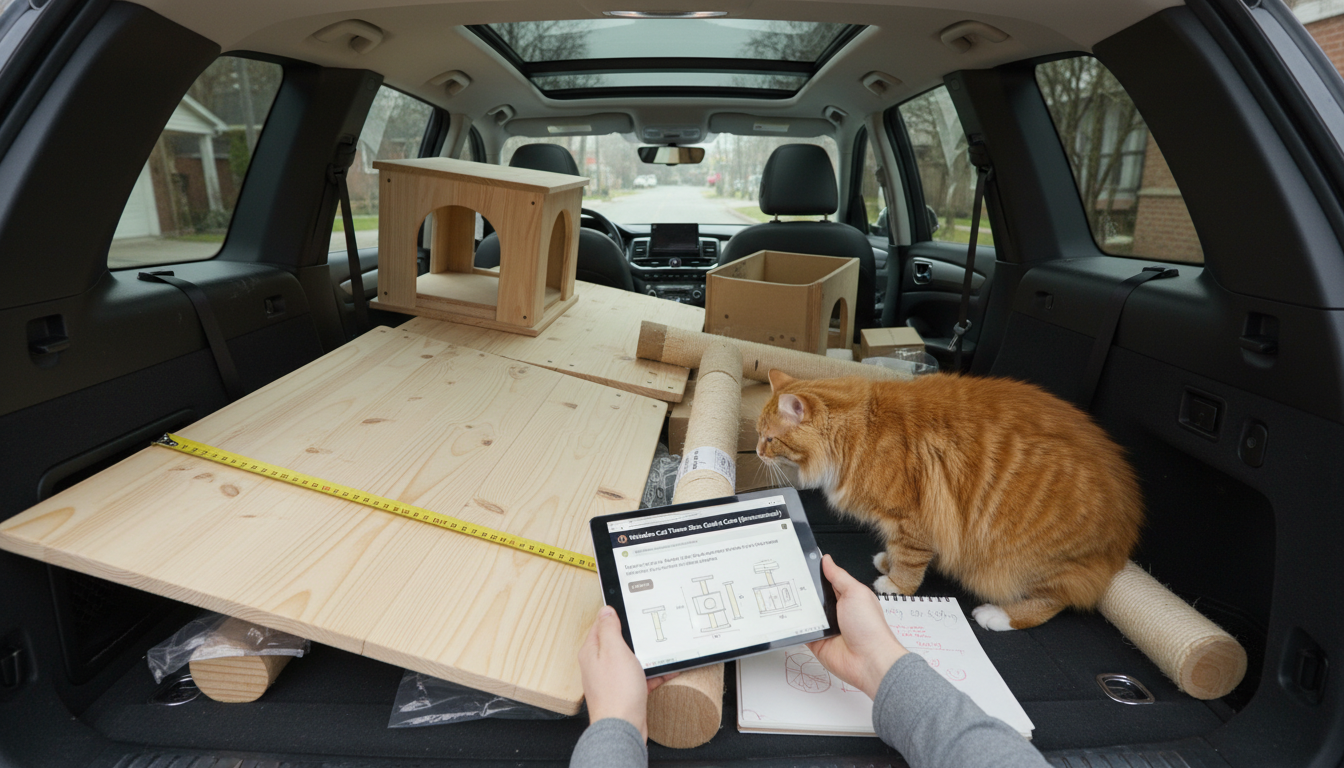
For big cats, a wooden cat tower should be larger, heavier, and roomier than standard models so it stays stable and actually fits their bodies. A solid starting point is a tower with a wide footprint (about 24–30 inches square or larger), thicker posts (4–6 inches in diameter), and platforms that are at least 18–24 inches wide/deep so your cat can turn around and sprawl without hanging off the edges.
Large cats put more side-load on a tower when they jump and pivot. Look for a heavy wooden base and an overall weight that feels “furniture-like,” not lightweight. If the tower is tall, a wider base matters more than height. For very tall setups, anchoring to a wall adds extra security.
Big cats tend to lounge stretched out, not curled into small perches. Aim for primary resting shelves that are at least 20 x 20 inches (bigger is better), with rounded edges and enough clearance between levels so your cat doesn’t have to crouch. If the tower includes a top bed, a 16–20 inch interior diameter usually fits large adult cats more comfortably than small “cup” beds.
If your cat loves hiding, make sure enclosed condos aren’t tight. A usable condo for larger breeds is typically around 15–18 inches tall and wide, with an entrance large enough to pass through without squeezing (about 8–10 inches in diameter or wider). If a condo looks cute but cramped, your cat may ignore it.
Some big cats prefer lower, sturdy steps and broad landings rather than tall, narrow climbs. A medium-tall tower with multiple large platforms often works better than an extra-tall tower with small perches. For more sizing guidance and practical examples, see the full guide here: https://azimuna.com/blog/what-size-wooden-cat-tower-is-best-for-cats/.
Look for a wide, heavy base, thick posts, and minimal wobble when pushed firmly from the side. For tall towers, choosing a wall-anchorable design can greatly improve safety for heavier cats.










Leave a comment